Our Products
 Loans
Loans
 Cards
Cards
 Insurance
 Investment
 Stock Market
 Electronics Mall
 CIBIL Score
 Knowledge Centre
 Calculators
Our Services

 Do not call
 En
En
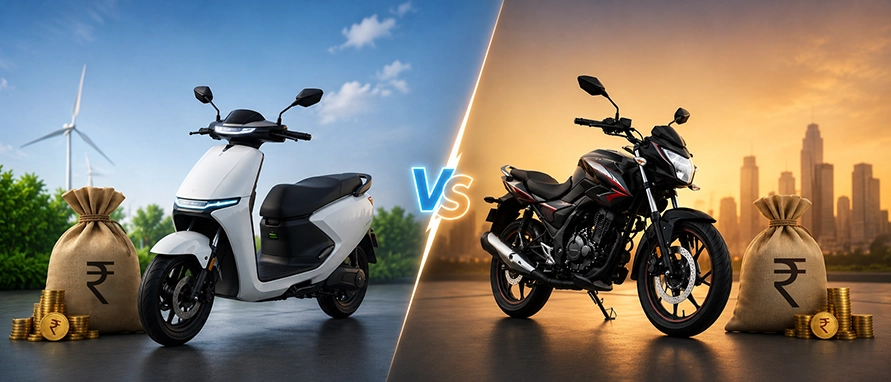
Two wheelers continue to be the preferred choice for commuting in India. With growing popularity and affordability of electric bikes, the comparison of electric vs petrol bikes has increased. Bikers are not just directed by engine capacity. In fact, they evaluate rising fuel costs against charging convenience and environmental possibilities. Thus, establishing a clear distinction between an electric bike vs petrol bike can influence the rider's buying decision.
An electric bike functions using a rechargeable battery and an electric motor instead of an internal combustion engine. It converts stored electrical energy into motion without using petrol or diesel. It eliminates the need for fossil fuels, turning stored electricity directly into torque.
Key components include:
Characteristics include:
A fuel bike, commonly known as a petrol bike, runs on an internal combustion engine that burns petrol to generate power for movement.
Petrol bikes remain popular due to their reliability, higher top speeds, and suitability for long rides.
The difference between electric bike and petrol bike lies mainly in energy source, operating cost, and environmental impact. Check out some established differences between a battery bike vs petrol bike below:
Feature |
Electric Bike |
Petrol Bike |
Power Source |
Battery and electric motor |
Petrol-driven engine |
Running Cost |
Lower due to electricity usage |
Higher due to fuel prices |
Emissions |
Zero tailpipe emissions |
Produces exhaust gases |
Noise Level |
Quiet operation |
Engine noise present |
Maintenance |
Fewer moving parts, simpler servicing |
Requires regular engine and oil maintenance |
Refuelling/Recharging |
Needs charging time |
Quick refuelling at stations |
This table highlights the practical comparison between electric bike and petrol bike based on everyday usage.
Performance and travel distance are important deciding factors when buyers compare electric bike and petrol bike options.
These differences define how each type performs in real-world conditions.
Deciding on whether an electric bike or petrol bike is better depends on your needs—budget, commute distance, and infrastructure. Therefore, it is important to compare an electric bike with a petrol bike before proceeding with your purchase. For instance,
This evaluation clarifies the difference between electric bike and petrol bike from a buyer’s perspective.
To conclude this comparison between electric bike and petrol bike, both choices fit different riding needs across India’s varied conditions. Electric models offer cost efficiency and an environmentally conscious option for urban travel, whereas petrol bikes continue to meet the demands of longer routes and mixed terrains. With gradual improvements in infrastructure, these two options are expected to function side by side, each appealing to a specific group of users.
Yes, electric bikes are generally cheaper to operate over time because electricity costs less than petrol and maintenance expenses are lower due to fewer mechanical components.
Petrol bikes typically have a better resale value than electric bikes. This is due to established demand and longer market presence, whereas electric bike resale depends largely on battery condition and evolving technology.
No, electric bikes usually require less maintenance since they do not need oil changes or engine servicing, although battery health must be monitored regularly.
Electric bikes typically offer 80–150 kilometres per charge in normal conditions, while petrol bikes can travel longer distances on a full tank and refuel instantly for continued use.




 47202
47202

Navigate the tax maze with ease! Uncover Income Tax 101, demystify jargon with Terms for Beginners, and choose between Old or New Regimes.
 165541
Unlock the world of credit! From picking the perfect card to savvy loan management, navigate wisely.
 97881
97881
Money Management and Financial Planning covers personal finance basics, setting goals, budgeting...
 28606
28606
Explore the investment cosmos! From beginner's guides to sharp-witted strategies, explore India's treasure trove of options.
 18764
18764
Discover essential insights on various types of insurance in India.
 4584
4584
Welcome to Tech in Finance, where we explore the exciting intersection of technology and finance...












 Academy