Our Products
 Loans
 Cards
 Insurance
 Investment
 Stock Market
 Electronics Mall
 CIBIL Score
 Knowledge Centre
 Calculators
Our Services

 Do not call
 En
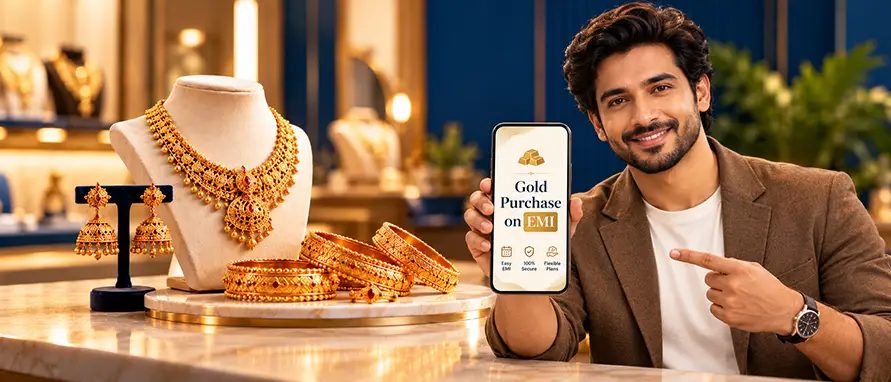
Gold prices continue to rise, making it harder for many buyers to pay the full amount upfront. Buying gold on EMI lets you spread the cost over several months, making this precious metal more accessible without straining your monthly budget. This guide explains how gold EMI purchases work, the options available, and what to check before you commit to one.
Buying gold on EMI means paying for your purchase in fixed monthly instalments instead of one lump sum. A jeweller, bank, or NBFC typically facilitates this arrangement, spreading the total cost, sometimes with added interest, over a set repayment period. This approach works similarly to financing any other high-value purchase, giving buyers more flexibility around large one-time expenses.
Rising gold prices have pushed many Indian buyers towards EMI options rather than paying upfront. Wedding season and festivals often demand large gold purchases, and EMI plans help families manage this expense without depleting their savings. Many jewellers now also offer Easy EMI EMI schemes, which remove or reduce the interest burden for shorter tenures. EMI options allow consumers to divide the cost of eligible jewellery purchases into manageable monthly instalments, making higher-value purchases more affordable.
Buying gold on EMI generally follows a straightforward process across most jewellers and platforms:
Buyers can typically choose from a few common EMI routes when purchasing gold:
Buying gold on EMI does not change the intrinsic value of the gold itself when you come to resell it.
EMI Charges Do Not Add to Resale Value
Any interest or processing fees paid during an EMI plan apply only to your financing cost, not the gold's actual worth. Resellers value gold based on its purity and weight, regardless of how you originally paid for it.
Gold Purity and Documents Always Come First
Buyers and resellers alike prioritise purity certification and proper documentation over the original payment method. Always keep your purchase invoice and hallmark certificate safe, since these directly affect resale value.
Jewellery vs. Gold Coins vs. Bars
Gold coins and bars generally hold resale value better than jewellery, since jewellery includes making charges that resellers don't reimburse. This distinction matters more for resale value than whether you paid upfront or through EMI.
Several jewellers and digital gold platforms now offer structured monthly instalment schemes, distinct from standard credit-based EMIs. These plans let you deposit a fixed amount each month towards a future gold purchase, often locking in weight rather than price. This method suits buyers who prefer disciplined saving over taking on interest-bearing credit.
Key features of these schemes typically include:
Most jewellers and lenders request the following documents before approving a gold EMI purchase:
Interest rates on gold EMI purchases vary widely depending on the lender, tenure, and whether the retailer offers a Easy EMI EMI scheme. Always compare the total repayment amount across options before choosing a plan.
Most jewellers offer EMI facilities on jewellery, though coins and bars may have more limited EMI availability depending on the retailer. Always confirm with the specific seller before assuming EMI applies to your chosen item.
Buying gold on EMI from established, reputable online jewellers is generally safe, provided they offer proper hallmark certification and transparent EMI terms. Always verify the seller's credentials and read the EMI agreement carefully before confirming your purchase.
Minimum purchase amounts for gold EMI vary by retailer and lender, with some setting thresholds as low as a few thousand rupees. Check directly with your chosen jeweller or platform for their specific EMI eligibility criteria.
Some banks allow you to convert eligible gold purchases into EMI through your credit card, though this depends entirely on your bank's specific policies and the merchant category involved. Contact your card issuer directly to confirm whether your gold purchase qualifies.
Many credit card issuers let you convert an existing gold purchase into EMI within a limited window after the transaction, typically through net banking, a mobile app, or customer support. Conversion eligibility and charges depend on your specific bank's terms.
Policies around using EMI cards for gold purchases have varied over time and across different card products, partly due to regulatory guidelines on jewellery financing. Check the latest terms directly on the Bajaj Finserv website or app, or confirm with your nearest partner store, before assuming a gold purchase qualifies.
If a gold purchase qualifies for EMI card use, the process typically involves selecting a participating jeweller, choosing the item, and presenting your EMI card details at checkout to convert the payment into instalments. Always confirm current eligibility and partner store availability directly with Bajaj Finserv beforehand.
Yes, many banks allow you to convert a gold purchase made on your credit card into EMI, provided the transaction meets their minimum amount and falls within the specified conversion window. Contact your bank directly to confirm the exact process and applicable charges.


Most Viewed

Academy by Bajaj Markets

 165542

Unlock the world of credit! From picking the perfect card to savvy loan management, navigate wisely.
 97887
Money Management and Financial Planning covers personal finance basics, setting goals, budgeting...
 28606
Explore the investment cosmos! From beginner's guides to sharp-witted strategies, explore India's treasure trove of options.
 47203
Navigate the tax maze with ease! Uncover Income Tax 101, demystify jargon with Terms for Beginners, and choose between Old or New Regimes.
 18764
Discover essential insights on various types of insurance in India.
 4584
Welcome to Tech in Finance, where we explore the exciting intersection of technology and finance...












 Academy