Our Products
 Loans
Loans
 Cards
Cards
 Insurance
 Investment
 Stock Market
 Electronics Mall
 CIBIL Score
 Knowledge Centre
 Calculators
Our Services

 Do not call
 En
En
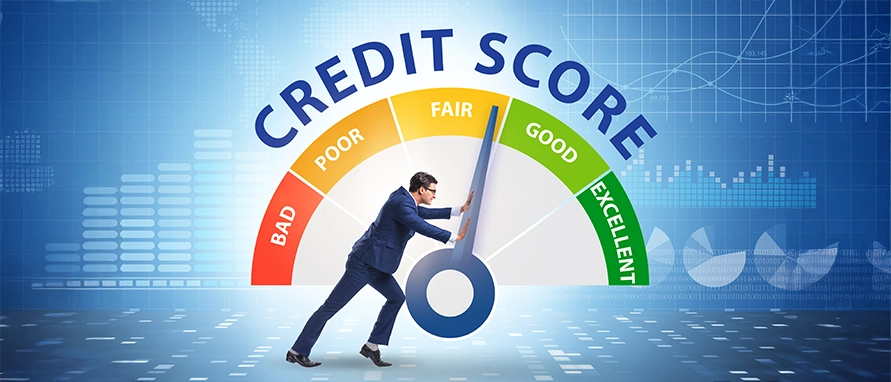
Your CIBIL Score affects your credit approval chances significantly. Learn how long it takes to improve your score with consistent financial responsibility and discipline.
Your CIBIL Score shows your creditworthiness to lenders when you apply for credit. It reflects your past repayment behaviour and how well you manage loans. A low score reduces your loan approval chances and may lead to higher interest rates. Improving this score takes time and requires financial discipline from your end. The duration depends on your current score, debt profile, and repayment record. Understanding this timeframe helps you plan your financial steps more carefully and effectively.
Quick Summary:
Reporting Frequency: Lenders report data monthly; updates typically reflect in 30 to 45 days
Rapid Gains: Expect the fastest score increases 30 to 60 days after paying down high debt balances
Key Drivers: Focus on payment history and credit utilisation for maximum impact
Recovery Times: Late payments stabilise in 3 to 6 months, while defaults require 12 to 24 months of consistent behaviour
Common Hurdles: High utilisation, frequent inquiries, and reporting errors significantly delay score recovery
New Credit: First-time borrowers can establish a solid score in 6 months using secured cards and timely payments
Your CIBIL Score does not increase immediately after any action. Lenders now report your payment and balance data to CIBIL more frequently under new RBI guidelines. CIBIL updates your score within 15 to 30 days, faster than the earlier 30-45 day cycle. If you make a payment today, the bank notes it in their next reporting window. That data reaches CIBIL within 7 to 15 days. Quick actions like paying off debt now show results faster than before. You check your score after 30 days to see visible changes. Instant jumps still never happen due to standard reporting processes. Lenders continue rolling out more frequent update cycles as RBI directives take full effect.
Lenders send your data to CIBIL each month without fail or delay. CIBIL processes it and refreshes your score based on the received information. Updates follow a fixed cycle with clear steps that remain consistent every month.
Lenders collect your EMI payments and card balances at your billing cycle end. They send this data to CIBIL within 7 to 30 days after collection. You see no instant change on your end during this period at all.
CIBIL receives data from banks and NBFCs (Non-Banking Financial Companies) every month. It runs calculations using factors like payment history and current outstanding balances. The new score appears 30 to 45 days after your actual action.
Scores update monthly for most users who have active credit accounts or loans. Banks report by the 7th of each month to maintain reporting schedules consistently. CIBIL shares the revised score by the month-end or early next month, usually.
You can check your score anytime via the CIBIL site or mobile app. It shows the latest processed data available in their system at that time. Soft checks by you carry no impact on your score whatsoever.
Your starting CIBIL Score and debt level set the improvement pace clearly. Your current financial habits determine how fast you see gains in your score. Lenders report changes monthly to CIBIL, which affects your score update timing.
This shows a quick impact on your score. You cut card use below 30% of your total available credit limit. Banks report low balances soon after your billing cycle ends each month. You can expect gains in 30 to 60 days from that point.
Credit history needs time to build properly. New users build their score gradually in 6 months with consistent good behaviour. Older accounts help your score steadily over 12 months or more with usage.
A high number of hard inquiries slows your progress towards a better score. You should avoid new loan applications during your improvement period to help with recovery. Inquiries fade from your report in 6 to 12 months automatically over time. Your score recovers faster without fresh credit pulls adding to your report.
Credit mix balances slowly over extended usage periods. You manage both loans and cards together to show diverse credit handling. Lenders see this variety after 6 months of consistent use and management.
You will see score changes after lenders report your data to CIBIL regularly. Timelines may vary depending on your actions and your starting score at that point. You can expect 30 days to 12 months for visible gains, depending on the situation.
Pay Off High Credit Card Debt: Your utilisation drops below 30% of your total credit limit available. Your score rises in 30 to 60 days after the bank reports a low balance. This is one of the fastest ways to see improvement in score.
Start Timely EMI Payments After Delays: Your payment history improves steadily with consistent on-time payments every month. You notice gains after 3 to 6 months of consistency in paying dues. This gradually rebuilds lender trust in your repayment ability over time.
Fix Errors on Your Credit Report: CIBIL resolves disputes within 30 days of raising a complaint with them. Corrected data boosts your score in the next update cycle after resolution. You should check your report regularly to spot errors early on.
Recover From Loan Default: Negative marks stay on your report for 7 years from the date. Your score climbs after 6 to 12 months of good habits despite the mark. Consistent positive behaviour helps offset the past default impact over time slowly.
Build Score From No History: You can use a secured card responsibly with low utilisation throughout each month. You may reach 700+ in 6 months with low use and timely payments. New credit users will need patience to establish a solid credit history properly.
Certain habits and events can slow your score gains significantly over extended periods. Lenders will see risks in these patterns and report them to CIBIL monthly. Changes may take longer to show positive results when these issues remain unresolved completely.
High Credit Card Balances: Maintaining high credit card balances consistently above recommended levels every month delays improvement. When utilisation remains above 30% of your limit, it signals credit dependency to lenders. Banks report heavy use monthly, which keeps your score low until debt drops significantly. Reducing outstanding balances can help you see improvement in this area more quickly.
Multiple Loan Applications: Submitting many loan or card applications within a short time period creates problems. Hard inquiries pile up on your report with each credit application made recently. Each pull can drop your score by 5 to 10 points temporarily at least. These effects may last 6 to 12 months before they stop impacting your score negatively.
Past Defaults or Settlements: These marks stay for 7 years on your report from the date recorded permanently. Lenders view borrowers with caution despite new good payments made now regularly. Old negative marks continue to weigh down your score throughout this entire period substantially.
Occasional Missed EMIs: Payment history carries 35% weight and suffers hits with each missed payment occurrence. Recovery needs 6 or more months of a perfect payment record maintained consistently afterwards. Even one miss can set back your improvement progress significantly over time substantially.
Uncorrected Errors on Report: Wrong data drags your score down without your fault in the matter entirely. The dispute process takes 30 days to investigate and resolve through CIBIL properly. This delay holds back gains until the error gets removed from records completely.
Recovery time depends on the severity of the issue you face currently. Lenders report fixes to CIBIL monthly after they process your updated data thoroughly. Consistent good habits can speed up the process and help you recover substantially faster.
Late Payments on EMIs: Resuming timely payments on all dues without any further delays helps stabilise scores. Your score may stabilise in 3 to 6 months with consistent on-time behaviour maintained regularly. Past marks fade gradually but may remain visible on your report for some time.
High Credit Utilisation Over 50%: Paying down balances to bring utilisation below 30% of limit shows quick results. Gains can appear in 1 to 2 months after reports update with new data. This is one of the quicker factors to fix and see results from noticeably.
Loan Default or Settlement: The mark remains on your report for 7 years from the date recorded permanently. Your score may improve after 12 to 24 months of a clean repayment record established consistently. Good behaviour can help offset the negative mark's impact over this extended period gradually.
Too Many Hard Inquiries: Stopping new credit applications helps avoid adding more inquiries to your report altogether. Impact may reduce noticeably in 6 months as inquiries age on your report naturally. Full drop-off from your report will take 24 months from the inquiry date exactly.
No Credit History: Opening a secured credit card or small loan helps start building history effectively. Building to a good score may take 6 months with responsible use throughout this period. Keeping utilisation low and paying all dues on time throughout this period helps significantly.
Your CIBIL Score improves through consistent financial habits over time. With regular lender updates, you may notice changes within a few weeks to a couple of months. Quick actions like reducing debt can show faster results, while recovering from defaults requires sustained good behaviour. Payment history and credit utilisation are key drivers of improvement. Monitor your report regularly to track progress and identify errors. Patience, timely payments, and responsible credit use will help you achieve a better score.
You can clear credit card debt completely when lenders report low balances in the next cycle. Your CIBIL score may rise in 30 to 60 days after the report updates.
Once you start making timely EMI payments after default consistently, lenders will mark accounts as current. Your score may improve in 3 to 6 months with continued good behaviour.
Loan default will stay on your report for 7 years from the date recorded. If you maintain good habits throughout this period, your score can recover in 12 to 24 months.
When you pay all bills on time regularly without any delays, payment history strengthens steadily. You may see positive trends in 90 to 180 days as lenders report consistently.
After you dispute and fix report errors through proper channels, CIBIL will update the data after review. As per RBI guidelines, banks have 21 days to verify a dispute, and CIBIL has 9 days to update the records, making it 30 days for resolution.
When you lower credit use below 30% of your limits consistently, banks will report new balances. Your score can increase in 30 to 60 days after the updated data reaches CIBIL.



Academy by Bajaj Markets

 47202
47202

Navigate the tax maze with ease! Uncover Income Tax 101, demystify jargon with Terms for Beginners, and choose between Old or New Regimes.
 165541
Unlock the world of credit! From picking the perfect card to savvy loan management, navigate wisely.
 97881
97881
Money Management and Financial Planning covers personal finance basics, setting goals, budgeting...
 28606
28606
Explore the investment cosmos! From beginner's guides to sharp-witted strategies, explore India's treasure trove of options.
 18764
18764
Discover essential insights on various types of insurance in India.
 4584
4584
Welcome to Tech in Finance, where we explore the exciting intersection of technology and finance...












 Academy