Our Products
 Loans
 Cards
 Insurance
 Investment
 Stock Market
 Electronics Mall
 CIBIL Score
 Knowledge Centre
 Calculators
Our Services

 Do not call
 En
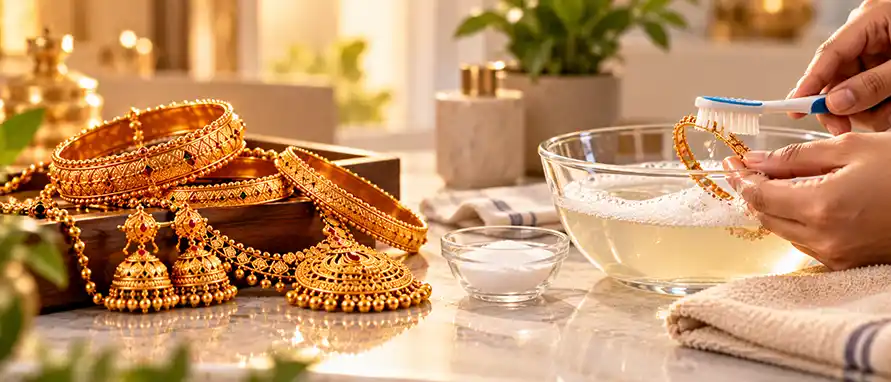
Gold jewellery loses its shine over time, but you can restore it safely at home using mild soap, lukewarm water, and a soft cloth. This guide walks you through simple, damage-free ways to wash gold jewellery and ornaments at home, along with tips to keep them sparkling for longer. Whether you're dealing with everyday dullness or ceremonial pieces worn only occasionally, knowing how to wash gold at home saves you both time and money on frequent professional visits.
Gold jewellery gradually loses its shine due to a build-up of surface dirt, body oils, and everyday exposure to lotions, perfumes, and sweat. Pure gold itself doesn't tarnish, but most jewellery contains alloy metals like copper or silver, which can oxidise slightly over time and dull the surface. This oxidation shows up as a faint discolouration, particularly around edges and in detailed settings where dirt collects more easily. Regular wear also exposes gold to dust and airborne particles, which settle into crevices and reduce its natural brilliance. Understanding this process helps explain why even well-maintained gold jewellery needs occasional cleaning to look its best, which is exactly why learning how to wash gold at home is such a useful, money-saving skill. Fortunately, restoring that shine rarely requires more than a few household items and a little patience.
The best way to wash gold jewellery at home is to soak it in warm water with a few drops of mild soap, then gently scrub and rinse it. This method works well for most everyday pieces, and once you know how to wash gold jewellery at home properly, you can repeat it safely every few weeks. Follow these steps for safe, effective results:
Fill a bowl with lukewarm water: Avoid hot water, since sudden temperature changes can stress certain gemstone settings.
Add a few drops of mild soap: Choose a gentle, fragrance-free soap rather than harsh detergents.
Soak the jewellery for 15-20 minutes: This loosens dirt and oils without requiring aggressive scrubbing.
Gently scrub with a soft cloth or brush: Focus on detailed areas where grime tends to accumulate.
Rinse thoroughly under running water: Ensure no soap residue remains on the piece.
Pat dry with a soft cloth: Avoid rubbing too hard, particularly on delicate settings.
Clean gold ornaments quickly and safely with warm water, mild soap, and a soft-bristle brush, using gentle, circular motions. Handle them carefully, as vigorous scrubbing can wear down delicate detailing over time. Learning how to wash gold ornaments at home correctly protects intricate carvings and stone settings that are common in traditional pieces.
Use a soft-bristle brush: An old, clean toothbrush works well to reach intricate patterns and grooves without scratching the surface.
Work in gentle, circular motions: Avoid pressing hard, and let the soap and water do most of the work.
Rinse thoroughly afterwards: Leftover soap can leave a dull film if not properly removed.
Check gemstones and enamel work: Confirm they remain securely in place both before and after cleaning, since gentle cleaning still involves some handling.
This straightforward approach to washing gold ornaments at home keeps your gold purity and finish intact without risking damage to intricate designs.
Different gold types respond differently to cleaning, so it helps to adjust your approach based on what you're washing.
22K gold jewellery: Being softer and richer in gold content, it benefits from extra-gentle handling to avoid bending or scratching delicate designs.
18K gold jewellery: With its slightly higher alloy content, it tolerates cleaning a little more robustly, though mild soap and soft brushing remain the safest choice.
Gold-plated jewellery: This needs the most caution, since its thin gold layer can wear away with vigorous scrubbing or prolonged soaking. Wipe gently with a damp, soft cloth rather than soaking, and avoid brushing altogether.
Gemstone or enamel pieces: Always check whether a piece contains gemstones or enamel work before cleaning, as these may need separate, specific care instructions regardless of the gold type underneath.
Certain household products and cleaning habits can permanently damage gold jewellery, so it's worth knowing what to avoid when you clean gold at home.
Harsh chemicals: Bleach and ammonia-based cleaners can weaken gold alloys and damage any gemstones set within the piece.
Abrasive cleaners: Rough scrubbing pads can scratch gold's soft surface, leaving permanent marks that dull its appearance.
Chlorine: Commonly found in swimming pools and some cleaning products, it reacts poorly with gold alloys and can cause discolouration or weakening over time.
Prolonged soaking: Avoid soaking gold jewellery beyond the recommended 15-20 minutes, since extended exposure to moisture can loosen certain settings.
Ultrasonic cleaners: Steer clear of these at home unless you're certain the piece contains no fragile gemstones, as vibrations can dislodge loose settings.
Maintaining your gold jewellery's shine relies on consistent, simple habits rather than occasional deep cleaning alone. Store each piece separately in a soft pouch or lined jewellery box, since gold can scratch against other metals or hard surfaces when stored together. Use a dedicated polishing cloth periodically to remove light surface dirt and restore shine between full washes. If you clean gold at home on a regular basis, ideally every few weeks depending on how often you wear it, you'll rarely need to wait until it looks visibly dull before restoring its shine. Remove gold jewellery before swimming, exercising, or applying lotions and perfumes, since these activities accelerate dirt build-up and surface wear. These small, consistent habits go a long way towards keeping your gold jewellery looking its best for years.
Certain situations call for professional jewellery cleaning rather than relying on home methods alone. Complex, heavily detailed pieces with multiple gemstones or intricate filigree work often benefit from a goldsmith's specialised tools and expertise. If cleaning gold at home doesn't restore your jewellery's shine, or if you notice loose stones, bent prongs, or structural wear, a professional inspection helps catch issues early. Antique or heirloom pieces, given their sentimental and monetary value, generally warrant professional care to avoid accidental damage. Consider an annual professional cleaning and inspection for jewellery you wear frequently, ensuring both its appearance and structural integrity stay in good condition over time.
Yes, mild soap and lukewarm water form the safest and most effective combination for cleaning most gold jewellery at home without causing any damage.
Yes, a soft-bristle toothbrush works well for gently cleaning gold jewellery, particularly in detailed areas, provided you use light, careful strokes throughout.
Cleaning gold jewellery every two to three weeks, depending on how often you wear it, helps maintain its shine and prevents excessive dirt build-up.
Baking soda is mildly abrasive and best avoided on gold jewellery, since it can scratch the surface, especially on softer, higher-karat pieces.
Avoid vinegar, since this acidic cleaning solution can damage gold alloys and any gemstones set within the jewellery over repeated use.
Pat your gold jewellery dry with a soft microfiber cloth, then allow it to air dry fully before storing it away safely.
Consider professional jewellery cleaning for antique pieces, intricate designs, or when home cleaning fails to restore shine, ideally with an annual goldsmith inspection.


Most Viewed

Academy by Bajaj Markets

 165542

Unlock the world of credit! From picking the perfect card to savvy loan management, navigate wisely.
 97887
Money Management and Financial Planning covers personal finance basics, setting goals, budgeting...
 28606
Explore the investment cosmos! From beginner's guides to sharp-witted strategies, explore India's treasure trove of options.
 47203
Navigate the tax maze with ease! Uncover Income Tax 101, demystify jargon with Terms for Beginners, and choose between Old or New Regimes.
 18764
Discover essential insights on various types of insurance in India.
 4584
Welcome to Tech in Finance, where we explore the exciting intersection of technology and finance...












 Academy