Our Products
 Loans
 Cards
 Insurance
 Investment
 Stock Market
 Electronics Mall
 CIBIL Score
 Knowledge Centre
 Calculators
Our Services

 Do not call
 En
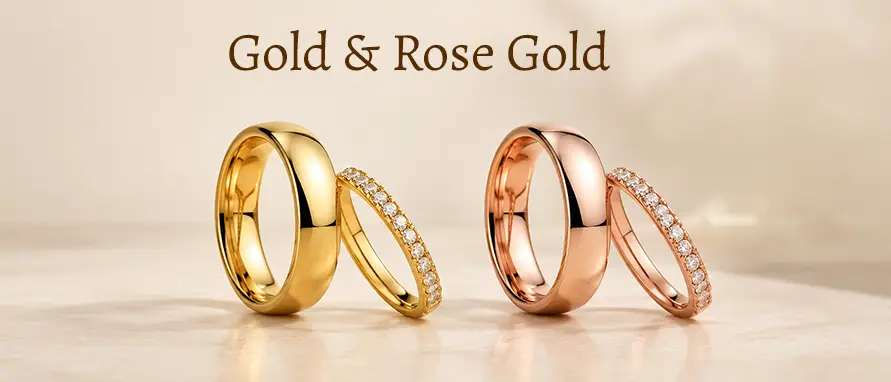
Yellow gold and rose gold differ mainly in their alloy composition, with rose gold containing a higher copper content that gives it a distinctive pinkish hue. Rose gold jewellery can be resized just as easily as yellow gold, since both use similar goldsmithing techniques, though rose gold's slightly higher copper content makes it marginally more resilient during resizing. Beyond composition, yellow gold offers timeless, traditional appeal, while rose gold suits contemporary, romantic styles. Understanding these differences in karatage, durability, and gold price helps you choose the metal that best suits your style and budget.
Yellow gold and rose gold both originate from pure gold, blended with other metals to improve strength and durability. These precious metals differ primarily in the specific alloys used, which changes both their colour and physical properties. You can explore the different types of gold karats to understand how purity levels affect each variant.
Yellow gold combines pure gold with silver and copper alloys, producing the warm, classic tone most people associate with gold jewellery. This traditional blend has remained popular for centuries, prized for its rich colour and enduring appeal.
Rose gold gets its distinctive pinkish hue from a higher proportion of copper mixed into the gold alloy. This composition gives rose gold a warm, romantic tone that has grown significantly in popularity for modern jewellery designs. You can read more about rose gold and its unique characteristics before making your choice.
The core difference between these two metals lies in their alloy composition, which directly affects both colour and karat purity.
Yellow gold: Blends pure gold with silver and copper in roughly balanced proportions.
Rose gold: Uses a higher copper-to-silver ratio, producing its signature pink tone.
Karat impact: Both metals follow the same karat system, though their gold purity percentage stays identical at each karat level, regardless of colour.
| Karat | Gold Purity | Common Alloy Metals |
|---|---|---|
24K Gold |
99.90% |
None (pure gold) |
22K Gold |
91.60% |
Silver, copper |
18K Gold |
75.00% |
Silver, copper |
Rose gold typically comes in 18K and 14K variants, since higher copper content works best at these karat levels for achieving a strong pink hue. The exact copper content varies by karat, with 18K rose gold containing less copper than 14K rose gold, since 18K carries a higher overall gold percentage. You can compare this against the broader range of gold karats to see how alloy ratios shift the final colour.
Choosing between yellow and rose gold often comes down to personal style and how each metal complements your skin tone. Yellow gold's warm hue suits deeper skin tones particularly well, while rose gold's blush tone flatters a wide range of complexions, including fairer skin.
Yellow gold remains a staple of traditional jewellery, carrying timeless elegance that has held cultural significance for generations. Its rich, warm tone continues to dominate bridal and ceremonial jewellery across many cultures.
Rose gold has surged in popularity for contemporary jewellery designs, offering a romantic appeal that feels distinctly modern. Its versatility allows it to pair beautifully with diamonds, gemstones, and other metals, making it a favourite among younger buyers seeking a fresh take on classic jewellery. This adaptability has helped rose gold move quickly from a niche trend into a mainstream jewellery choice worldwide.
Both metals require some care, though their alloy composition affects how each holds up to daily wear.
Yellow gold's durability depends heavily on its karatage, since higher-karat pieces contain more soft, pure gold and less hardening alloy.
Higher karatage yellow gold scratches more easily due to its softness.
Lower karat yellow gold, such as 14K, resists scratches better.
Regular polishing and careful storage help maintain its shine over time.
Rose gold's higher copper content makes it noticeably more durable than yellow gold at the same karat level, offering better resistance to everyday wear. This added strength makes rose gold a practical choice for rings and bracelets worn daily. However, copper can be more prone to tarnish in humid conditions, so occasional cleaning still helps preserve its finish.
Price differences between yellow and rose gold stem mainly from their gold content and market demand, rather than any inherent premium in either metal.
Yellow gold's price depends primarily on its gold content, with higher karat pieces costing more due to their greater pure gold percentage. Craftsmanship and design complexity also add to the final price, alongside the metal's resale value, which stays strong given yellow gold's consistent market demand.
Rose gold's price depends on its alloy composition, since a higher copper content typically costs less than pure gold, keeping rose gold marginally more affordable at equivalent karat levels. Design complexity also plays a role, as intricate rose gold pieces command higher prices. Trend-driven demand has pushed rose gold's popularity upward in recent years, which can influence pricing in some markets. You can read more about why gold prices are increasing to understand how broader market trends affect both metals.
Choosing between yellow and rose gold ultimately depends on your personal style, lifestyle, and long-term goals.
Personal style: Choose yellow gold for a classic look, or rose gold for a modern, romantic feel.
Longevity: Consider rose gold if you want a slightly more durable option for daily wear.
Investment value: Yellow gold generally holds stronger resale value, given its established market demand.
Before finalising your purchase, review these tips for buying gold to ensure you make a confident, informed decision.
Yes, rose gold is real gold, made by blending pure gold with a higher proportion of copper alloy to create its distinctive pink colour.
Rose gold can develop slight oxidation over time due to its copper content, which may cause subtle colour changes, though regular cleaning helps preserve its original hue.
At the same karat level, yellow gold and rose gold hold similar gold value, though yellow gold often commands slightly higher market demand and resale value.
Yes, mixing yellow gold and rose gold jewellery has become a popular styling choice, with many people stacking both metals together based on personal preference.


Most Viewed

Academy by Bajaj Markets

 165542

Unlock the world of credit! From picking the perfect card to savvy loan management, navigate wisely.
 97887
Money Management and Financial Planning covers personal finance basics, setting goals, budgeting...
 28606
Explore the investment cosmos! From beginner's guides to sharp-witted strategies, explore India's treasure trove of options.
 47203
Navigate the tax maze with ease! Uncover Income Tax 101, demystify jargon with Terms for Beginners, and choose between Old or New Regimes.
 18764
Discover essential insights on various types of insurance in India.
 4584
Welcome to Tech in Finance, where we explore the exciting intersection of technology and finance...












 Academy