Our Products
 Loans
Loans
 Cards
Cards
 Insurance
 Investment
 Stock Market
 Electronics Mall
 CIBIL Score
 Knowledge Centre
 Calculators
Our Services

 Do not call
 En
En
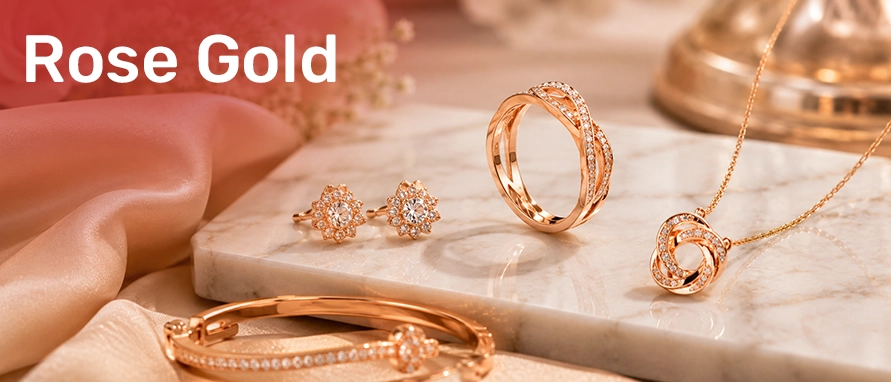
Table of Content
Understand what rose gold is, how it is made, how it differs from other gold types, and how its purity and value are assessed for jewellery purchases and gold loans.
Rose gold is a widely used gold alloy known for its distinctive pink or reddish tint. Unlike pure gold, which has a naturally bright yellow appearance, rose gold is created by combining gold with other metals that alter its colour and improve its durability. It is widely used in rings, necklaces, bracelets, watches, and other jewellery items due to its unique appearance and versatility.
Today, rose gold is considered one of the most popular jewellery metal choices, offering an alternative to traditional yellow gold and white gold while retaining the intrinsic value associated with gold content.
Rose gold has become increasingly popular across modern and traditional jewellery collections due to its distinctive appearance and practical characteristics.
Its growing appeal can be linked to several factors.
The warm pink tone offers a different look from conventional yellow and white gold, making it a popular choice across a wide range of jewellery designs.
Rose gold is commonly used in engagement rings, wedding bands, watches, earrings, pendants, and fashion jewellery because it pairs well with different gemstones and design styles.
The addition of copper strengthens the alloy, making rose gold jewellery generally more resistant to wear compared to higher-purity yellow gold jewellery.
Its popularity across luxury and fashion jewellery collections has contributed to strong consumer demand in recent years.
Pure gold is naturally soft, which is why jewellery manufacturers mix it with other metals to improve strength and durability.
The primary difference between rose gold, yellow gold, and white gold lies in the alloy composition used during manufacturing.
Different metal combinations create distinct colour tones ranging from yellow and white to pink and reddish shades.
Each gold type contains different proportions of alloy metals, which influence appearance, durability, and maintenance requirements.
While all three types are commonly used in jewellery, certain designs may utilise one alloy over another depending on the desired finish and styling preferences.
The unique colour of rose gold comes from a carefully balanced combination of metals.
Pure gold forms the primary component of the alloy and contributes to the intrinsic value of the jewellery.
Copper is added in larger proportions than in traditional yellow gold alloys. This gives rose gold its characteristic pink or reddish colour while also improving strength and durability.
Small quantities of silver may be included to balance the alloy composition and help achieve the desired colour tone and structural properties.
The exact metal ratio varies depending on whether the jewellery is 18K, 22K, or another purity level.
Rose gold has gained widespread popularity across both contemporary and classic jewellery collections.
Its soft pink colour provides a visually different alternative to traditional gold jewellery.
Rose gold is frequently used in minimalist, contemporary, and designer jewellery collections due to its unique aesthetic appeal.
The alloy is popular across different age groups and jewellery categories, ranging from everyday accessories to bridal collections.
Rose gold is commonly used in rings, bracelets, necklaces, earrings, watches, and premium fashion accessories.
Understanding the differences between these gold types helps explain how alloy composition influences appearance and characteristics.
| Feature | Rose Gold | Yellow Gold | White Gold |
|---|---|---|---|
Primary Alloy Metal |
Copper |
Silver, copper, and zinc |
Nickel, palladium, or silver |
Colour |
Pink or reddish tone |
Natural yellow gold colour |
Silvery-white appearance |
Durability |
Generally durable due to copper content |
Moderate durability |
Durable with protective plating |
Popular Usage |
Modern jewellery and watches |
Traditional jewellery |
Contemporary jewellery and engagement rings |
Maintenance Requirements |
Relatively low maintenance |
Moderate maintenance |
May require periodic rhodium replating |
Proper care helps preserve the appearance and finish of rose gold jewellery over time.
A mixture of warm water and mild soap can help remove dirt, oils, and everyday residue from jewellery surfaces.
Using a soft, non-abrasive cloth helps clean the jewellery without scratching the metal finish.
A soft-bristled brush may be used to clean hard-to-reach areas around gemstones and detailed settings.
Strong cleaning products and abrasive materials may affect the surface finish and should generally be avoided.
Rose gold jewellery can generally be considered for gold loans, provided it meets the lender's eligibility and purity requirements.
Since rose gold contains genuine gold, lenders evaluate its gold content before determining loan eligibility.
Eligible rose gold jewellery may be accepted as collateral under standard gold loan products.
Lenders assess purity, weight, and prevailing gold rates before calculating the eligible loan amount.
The jewellery remains in the lender's custody during the loan tenure and is returned after repayment is completed.
The final loan amount depends on gold content and the lender's loan-to-value policy.
Several factors influence how rose gold jewellery is valued during loan assessment.
Higher gold content generally results in a higher valuation and potentially greater loan eligibility.
The net gold weight plays a significant role in determining the assessed value.
Current gold rates influence the market value assigned during the appraisal process.
Lenders apply approved LTV ratios to determine the amount that can be sanctioned against the assessed value.
Individual lending institutions may follow slightly different valuation procedures and eligibility criteria.
Verifying purity helps establish the actual gold content of the jewellery before valuation.
A BIS hallmark indicates that the jewellery meets prescribed purity standards and has undergone certification.
Lenders and jewellers may use electronic testing equipment or specialised evaluation techniques to determine gold content accurately.
Karat markings such as 18K, 22K, or 14K help identify the gold purity level present in the jewellery.
Authorised jewellers and lending institutions can perform formal assessments to verify purity before valuation.
Rose gold has a pink, reddish, or blush-toned appearance created by mixing pure gold with copper and other alloy metals.
Yes. Rose gold is genuine gold that has been combined with other metals to create its distinctive colour and improve durability.
Rose gold is typically made by combining pure gold with copper and, in some cases, small amounts of silver to create the desired colour and strength.
Rose gold became popular in jewellery designs originating from Europe and later gained widespread recognition through vintage and contemporary jewellery collections.
The price of rose gold jewellery depends largely on its gold purity and weight. Additional factors such as alloy composition, making charges, design complexity, and certification may influence the final price.
The appearance of rose gold and yellow gold varies based on personal preference, styling choices, and individual aesthetic considerations. Both remain widely used across jewellery categories.



Academy by Bajaj Markets

 47202
47202

Navigate the tax maze with ease! Uncover Income Tax 101, demystify jargon with Terms for Beginners, and choose between Old or New Regimes.
 165541
Unlock the world of credit! From picking the perfect card to savvy loan management, navigate wisely.
 97881
97881
Money Management and Financial Planning covers personal finance basics, setting goals, budgeting...
 28606
28606
Explore the investment cosmos! From beginner's guides to sharp-witted strategies, explore India's treasure trove of options.
 18764
18764
Discover essential insights on various types of insurance in India.
 4584
4584
Welcome to Tech in Finance, where we explore the exciting intersection of technology and finance...












 Academy