Our Products
 Loans
 Cards
 Insurance
 Investment
 Stock Market
 Electronics Mall
 CIBIL Score
 Knowledge Centre
 Calculators
Our Services

 Do not call
 En
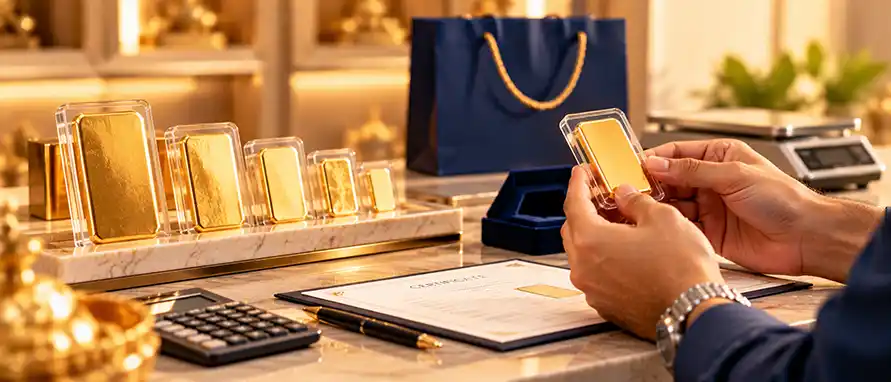
To buy a gold biscuit in India, you purchase it from a BIS-certified jeweller, licensed bullion dealer, or select bank counter, after checking its purity, hallmark, and current gold rate. You can purchase gold bars the same way, by comparing making charges, GST, and buyback terms across trusted sellers before paying. Gold bars generally suit investors better than digital gold when you want a physical, tangible asset you can hold, store, and pledge as collateral, though digital gold offers easier entry with smaller investment amounts and no storage hassle. Both remain valid options depending on your goals, but physical gold biscuits carry a stronger resale and loan-eligibility advantage.
Gold biscuits offer a straightforward way to invest in physical gold without the added cost of jewellery-making charges. Their high purity and standardised weight make them easy to value, buy, and resell. Compared with other options, gold biscuits sit alongside coins and bars as pure investment assets rather than decorative pieces. If you're still weighing your options, it also helps to compare diamonds vs gold and which is better for investment before committing your funds.
Gold biscuits are rectangular pieces of gold, typically cast in 24-karat purity, designed specifically for investment rather than ornamentation. Their flat, compact shape makes them easy to store and stack securely, whether at home or in a bank locker.
Gold biscuits appeal to investors for a few clear reasons:
High purity: Most gold biscuits carry 24-karat, 999 purity, giving you maximum gold content for your money.
Low making charges: Since biscuits skip intricate jewellery design work, you avoid the high making charges attached to ornaments.
Strong resale value: Their standard purity and weight make gold biscuits easy to value and sell when you need funds.
Each investment-grade gold format suits a slightly different type of buyer, based on purpose and budget.
| Feature | Gold Biscuits | Gold Coins | Gold Bars |
|---|---|---|---|
Typical Purity |
24K (999) |
22K-24K |
24K (999/999.9) |
Best Suited For |
Individual investors |
Gifting, smaller investments |
Bulk investors, institutions |
Making Charges |
Low |
Moderate, due to engravings |
Lowest per gram |
Resale Ease |
High |
Moderate |
High, especially in bulk |
You can explore the different types of gold karats to understand how purity affects value across these formats.
Gold biscuits suit individual investors well, since they combine high purity with comparatively low premiums over the base gold rate. Their manageable size also makes them practical for smaller, regular investments.
Gold coins often carry decorative engravings, making them a popular gifting choice during festivals and celebrations. However, these engravings add to the making charges, so coins typically cost slightly more per gram than plain biscuits or bars. You can find more reasons to consider gold as an investment if you're comparing coins against other formats.
Gold bars suit bulk investors and institutions best, since larger weights bring the lowest per-gram cost among all physical gold formats. Many long-term investors choose bars specifically for long-term wealth storage, given their minimal premium over the spot gold rate.
Verifying authenticity and purity protects you from fraud and ensures fair value for your investment. Always review the seller's credentials, request proper documentation, and confirm purity markings before finalising any purchase. Reading a few tips for buying gold beforehand can help you avoid common mistakes first-time buyers often make.
While professional testing remains the most reliable method, a few basic checks can help you spot obvious red flags at home:
Check the hallmark: Genuine gold biscuits carry a BIS hallmark stamp confirming their purity.
Try the magnet test: Real gold isn't magnetic, so a strong attraction to a magnet signals a fake.
Attempt the water float test: Genuine gold sinks in water due to its density; items that float likely contain other metals.
For a definitive purity check, always rely on professional verification rather than home tests alone. You can read more about gold purity standards to understand what these tests can and can't confirm.
A genuine BIS hallmark includes the official BIS logo, a purity mark such as 999 or 999.9, and a unique HUID number specific to that piece. This HUID number lets you verify the item's authenticity directly through the BIS Care app or website. Learn more about gold hallmarks and how to identify gold jewellery purity before making your purchase.
You can buy gold biscuits from several trusted sources, each offering different advantages around pricing, certification, and convenience. Choosing the right source depends on how much you're investing and how you plan to store or resell the gold later.
Established, BIS-certified jewellers remain among the most reliable sources for gold biscuits, offering certified purity and transparent billing. Many also provide buyback options, which adds valuable flexibility if you plan to resell your investment later.
Licensed bullion dealers typically offer market-linked pricing with lower premiums, particularly attractive for bulk purchases. These dealers focus specifically on investment-grade gold, often making them a cost-effective choice for serious investors.
Platforms like MMTC-PAMP, Augmont, and SafeGold let you buy digital gold online, which you can later convert into physical biscuits or coins for a fee. This route suits buyers who want to start small and consolidate their holdings into physical gold over time.
Several factors combine to determine the final price you pay for a gold biscuit, beyond the base gold rate itself. Understanding these components helps you evaluate whether a quoted price feels fair. Keep an eye on the current gold price before finalising any purchase.
Global gold prices shift daily, driven by economic factors, currency fluctuations, and international demand. Since Indian gold prices track these global movements closely, checking the live rate on your purchase day helps you avoid overpaying.
Gold biscuits typically carry minimal to no making charges, unlike jewellery, since they involve no decorative craftsmanship. However, a flat 3% GST applies to the gold value itself, regardless of whether you buy a biscuit, coin, or bar, which adds directly to your final investment cost.
Proper documentation protects your investment and simplifies future resale, while secure storage keeps your gold safe from theft or damage.
Most sellers require the following documents before completing a gold biscuit purchase:
ID proof: Aadhaar card, passport, or voter ID, as accepted by the seller.
Address proof: Utility bills or Aadhaar card confirming your current residence.
PAN card: Mandatory for purchases above the threshold specified under current regulations.
Bank lockers offer strong security for larger gold holdings, though they come with an annual rental cost. A home safe provides more convenient access for smaller quantities, provided it's properly secured. Some investors also opt for insured storage through specialised vault services, adding an extra layer of protection against loss or theft.
Most Indian banks sell gold coins rather than gold biscuits directly, and generally don't offer physical gold biscuits or buyback services. For actual gold biscuits, authorised jewellers or bullion dealers remain the more direct route, while banks also offer paper-based alternatives like Sovereign Gold Bonds (SGBs).
The ideal weight depends on your budget and investment goals, with smaller weights like 1 gram to 10 grams suiting regular investors, while larger weights suit bulk investors seeking lower per-gram costs and easier long-term resale value.
Always check for a valid BIS hallmark and request a purity certificate from the seller. Buying only from a trusted dealer with transparent documentation further reduces the risk of purchasing under-purity or counterfeit gold.
Online platforms offer convenience and competitive pricing, particularly for digital gold that you can later convert to physical form.
Offline purchases from certified jewellers let you inspect the biscuit and documentation in person before paying, which some investors prefer for larger purchases.
Gold biscuits attract a flat 3% GST on their gold value, with no additional making-charge tax since they carry no decorative work. Selling gold biscuits later may also trigger capital gains tax, depending on your holding period, so it's worth understanding applicable tax laws before you sell.


Most Viewed

Academy by Bajaj Markets

 165542

Unlock the world of credit! From picking the perfect card to savvy loan management, navigate wisely.
 97887
Money Management and Financial Planning covers personal finance basics, setting goals, budgeting...
 28606
Explore the investment cosmos! From beginner's guides to sharp-witted strategies, explore India's treasure trove of options.
 47203
Navigate the tax maze with ease! Uncover Income Tax 101, demystify jargon with Terms for Beginners, and choose between Old or New Regimes.
 18764
Discover essential insights on various types of insurance in India.
 4584
Welcome to Tech in Finance, where we explore the exciting intersection of technology and finance...












 Academy