Our Products
 Loans
 Cards
 Insurance
 Investment
 Stock Market
 Electronics Mall
 CIBIL Score
 Knowledge Centre
 Calculators
Our Services

 Do not call
 En
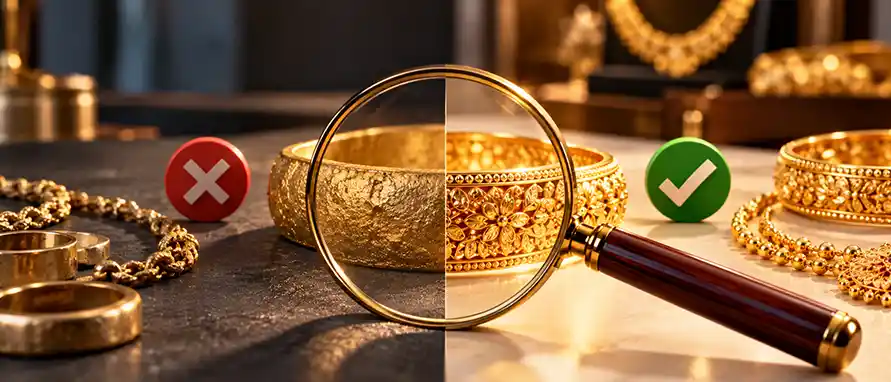
Table of Contents
Learn how to identify real gold and spot fake gold using simple home tests and professional verification methods. Discover purity standards, common counterfeits, and testing tips.
Unlocking the true value of your precious metal assets starts with knowing exactly what you own. Whether you are sorting through family heirlooms, planning to purchase new investment bars, or preparing to leverage your assets for a gold loan, being able to distinguish genuine items from counterfeit alternatives is essential. Understanding how to identify real gold protects your hard-earned money and ensures your assets hold their true worth in times of financial need.
Real gold is a highly dense, naturally occurring chemical element renowned for its signature yellow lustre, exceptional malleability, and resistance to tarnishing. In its pure form known as 24 karat gold the metal contains 99.9% pure gold and is incredibly soft, making it unsuitable for daily-wear jewellery. To enhance its structural strength, gold is routinely alloyed with other durable metals such as copper, silver, zinc, or palladium. Regardless of the alloy ratio, genuine gold remains a highly sought-after, dense store of value that is completely non-magnetic and highly resistant to most chemical reactions.
Fake gold refers to any material designed to mimic the appearance of solid gold without containing the specified precious metal purity. This category encompasses base metals such as brass, copper, or steel coated with a microscopic layer of gold (gold plating) or engineered alloys formulated to match the weight and colour of the real metal. In modern times, counterfeit gold has become highly sophisticated, with manufacturers stamping false markings like "14K" or "18K" onto cheap core metals that are designed to bypass basic magnet or visual inspection checks.
While advanced laboratory equipment is the ultimate benchmark, you can perform several practical checks to determine the legitimacy of your assets:
The Magnet Test: Gold is naturally non-magnetic. Hold a strong rare-earth magnet next to your gold item. If the item is strongly drawn to the magnet, it likely contains a steel or iron core, indicating it is fake. However, please note that some non-magnetic base metals are also used in fakes, so this test should never be used on its own.
The Float Test: Because gold is extremely dense, it will sink immediately to the bottom of a container filled with water. If your gold item floats, hovers, or shows signs of oxidation after being submerged, it is likely counterfeit.
Unglazed Ceramic Plate Test: Rub your gold piece gently against a piece of raw, unglazed ceramic. If the item leaves a golden streak, the gold is real. If it leaves a black, grey, or dark-coloured line, you are dealing with fake metal.
The Vinegar Test: Place a few drops of white vinegar on the surface of your gold. Genuine gold is highly inert and will not react or discolour. If the metal changes colour, starts bubbling, or changes its overall appearance, it is fake.
For a definitive valuation that stands up to financial and commercial standards, professional assayers and jewellers utilise highly advanced, non-destructive technologies:
X-Ray Fluorescence (XRF) Spectrometry: The gold standard of modern metal analysis. XRF analyzers shoot X-rays at the metal and measure the fluorescent energy emitted back. This technique identifies the exact elemental breakdown of your piece down to a fraction of a percent without causing any surface damage.
Electronic Purity Testers (Karat Meters): These portable tools measure the electrical conductivity of the metal, which varies predictably based on its purity and alloy makeup. This method offers rapid, non-destructive results.
Ultrasonic Testing: This process transmits high-frequency sound waves through the gold to check for internal structural consistency. It is particularly effective for identifying hollow cores or heavy tungsten blocks slipped inside high-value gold bars.
Detecting counterfeits requires keeping an eye out for telltale signs of cheap manufacturing:
Discolouration and Wear Marks: Check high-friction areas, such as clasps, edges, and inner bands. If the outer gold layer has worn away to reveal a silver, grey, or reddish copper tone underneath, the item is plated.
Irregular and Crude Hallmarking: Fake gold often features stamps that appear crooked, blurry, or use incorrect fonts. Authentic markings are clean, highly precise, and well-proportioned.
Green or Black Skin Residue: When cheap alloys react with natural body oils and sweat, they oxidise and leave a green or black ring on your skin. Pure gold does not oxidise or leave these marks.
Suspicious Weight for Size: If a piece of jewellery feels unusually light or lacks the reassuring "heaviness" characteristic of dense gold, its core is likely a low-density base metal like aluminium or brass.
Recognising the differences between these two states is key to avoiding costly purchasing mistakes.
| Feature | Real Gold | Fake Gold |
|---|---|---|
Material Composition |
Solid precious metal ($Au$) or certified standard alloy. |
Base metals like copper, brass, or lead with surface plating. |
Reaction to Acids |
Resists standard testing acids (nitric acid) completely. |
Readily turns green, black, or bubbles under acid. |
Magnetic Properties |
100% non-magnetic. |
Frequently attracted to magnets, depending on the core metal. |
Corrosion & Tarnishing |
Highly resistant to tarnish, rust, and discolouration. |
Easily tarnishes, corrodes, or shifts colour when exposed to moisture. |
Resale & Loan Value |
commands high market-linked resale and loan valuations. |
Holds virtually zero resale value or financial collateral weight. |
Assessing the exact karat weight of your gold is crucial before initiating a sale or taking out a gold loan.
Verify the BIS Hallmark: In India, look for the official Bureau of Indian Standards (BIS) hallmark logo alongside a six-digit alphanumeric HUID (Hallmark Unique Identification) code. You can verify this HUID online using the official BIS Care mobile app.
Recognise Karat Markings: Genuine items are stamped with standard fineness markers:
24K: 99.9% pure gold
22K: 91.6% pure gold
18K: 75.0% pure gold
Request a Karat Meter Analysis: Most certified jewellers and lenders feature high-accuracy desktop karat meters that scan and verify the exact karat breakdown of your ornament within seconds.
Relying on a single test is one of the most common mistakes when verifying gold. A high-quality gold plating can easily pass a simple surface acid scratch test, while non-magnetic fake alloys can slip past a basic magnet test.
Additionally, avoid aggressive, non-professional testing methods at home. Dragging gold deeply across rough surfaces or using strong industrial acids can permanently scratch or damage your precious ornaments, diminishing their aesthetic and resale value. Always consult certified specialists to ensure safe, accurate, and non-destructive evaluations.
Buy Only BIS Hallmarked Jewellery: Ensure every item carries the official BIS logo, the purity grade, and a verifiable six-digit HUID code.
Demand a Transparent Tax Invoice: Make sure your sales receipt details the exact weight, karat value, current market gold rate, and making charges separately.
Purchase from Certified Outlets: Stick to established, accredited jewellers who offer clear buyback terms and use digital karat meters.
Cross-Reference Live Rates: Always compare the dealer’s gold pricing with the official daily gold rates in India before checking out.
While home testing methods provide quick, basic assessments, professional verification is highly recommended in the following scenarios:
Inheriting Heirloom Jewellery: When dealing with antique pieces that lack clear hallmark stamps or HUID codes.
Entering Private Transactions: If you are purchasing gold from an individual seller or via unregulated online platforms.
Applying for a Gold Loan: Lenders require absolute proof of purity to calculate your maximum eligible loan amount.
High-Value Liquidations: Before selling large quantities of bullion bars, coins, or jewellery to ensure you receive a fair, market-accurate payout.
When applying for a gold loan in India, the purity of your pledged gold is the single most critical factor determining your eligibility and loan amount.
Minimum Purity Threshold: Most financial institutions accept gold ornaments ranging from 18 to 22 karats, while 24K gold is accepted primarily in the form of mint-issued coins (typically capped up to 50 grams per borrower).
Collateral Valuation: The lender calculates the loan value based solely on the weight of the pure gold content, completely excluding any embedded gemstones, pearls, or enamel.
Loan-to-Value (LTV) Ratio: A verified high-purity rating ensures you qualify for the maximum regulatory LTV (up to 75% of the gold's market value), helping you secure a larger cash payout against the same weight of gold.
Before presenting your gold assets to a lender, follow these best practices to safeguard your interests:
Clean Your Jewellery Safely: Remove any accumulated dirt or grime using mild soap and warm water, allowing the tester to scan clean surfaces.
Document and Weight Your Pieces: Weigh your items on a precise kitchen scale at home and take clear photographs of all hallmarked sections as baseline proof.
Insist on Non-Destructive Testing: Request the lender use an XRF spectrometer or a digital karat meter rather than destructive acid scratching, ensuring your ornaments remain in pristine condition.
Obtain a Formal Valuation Receipt: Ensure the lender provides a signed receipt documenting the exact weight and tested purity before they deposit your gold into high-security vaults.
The safest way to check gold at home is by looking for the official BIS hallmark and HUID code under a magnifying glass. You can also pair this with the non-destructive float test (ensuring it sinks immediately) and the magnet test (confirming the item is not attracted to a magnet).
X-ray Fluorescence (XRF) spectrometry is the most accurate, fast, and completely non-destructive gold testing method available. It analyzes the exact elemental composition of the metal within seconds without causing any physical damage.
Lenders typically check for official BIS hallmarks first, followed by a digital karat meter or XRF spectrometer analysis to verify the gold's exact purity. In some traditional setups, touchstone testing or basic density checks may also be used.
If your gold falls below the minimum accepted purity standard (usually 18K for jewellery), the lender will either reduce the eligible loan amount to reflect only the pure gold content or refuse the item as valid collateral.
A gold acid test involves rubbing the gold item onto an unglazed touchstone to leave a small streak of metal, and then applying varying concentrations of nitric acid to that streak. If the streak dissolves or changes colour (like turning green), it indicates the presence of base metals or a low-carat alloy.
Gold checking acid uses highly corrosive nitric acid, which can cause severe skin burns and emit harmful fumes. It can also leave permanent, unsightly marks on your gold jewellery, which is why it is best left to trained professionals.
Yes. Modern, high-quality gold plating can be thick enough to resist surface-level acid scratch tests. If the acid does not penetrate past the thick plated outer layer, a fake item can pass, making multi-test verification necessary.
A standard retail gold testing kit typically includes a black touchstone (for creating metal streaks), multiple bottles of testing acids calibrated to different karat levels (such as 10K, 14K, 18K, and 22K), a set of gold testing needles, a magnifying glass, and a safety instruction guide.



Academy by Bajaj Markets

 47202

Navigate the tax maze with ease! Uncover Income Tax 101, demystify jargon with Terms for Beginners, and choose between Old or New Regimes.
 165541
Unlock the world of credit! From picking the perfect card to savvy loan management, navigate wisely.
 97881
Money Management and Financial Planning covers personal finance basics, setting goals, budgeting...
 28606
Explore the investment cosmos! From beginner's guides to sharp-witted strategies, explore India's treasure trove of options.
 18764
Discover essential insights on various types of insurance in India.
 4584
Welcome to Tech in Finance, where we explore the exciting intersection of technology and finance...












 Academy