Our Products
 Loans
Loans
 Cards
Cards
 Insurance
 Investment
 Stock Market
 Electronics Mall
 CIBIL Score
 Knowledge Centre
 Calculators
Our Services

 Do not call
 En
En
 We don’t spam
Resend OTP
We have some offers for you.
 100% safe and secure
A Bali trip from India in 2026 could cost around ₹35,000 to ₹1 Lakh for a 7-day itinerary, covering flights, accommodation, food, transport, and other travel expenses.
Last updated on: Aug 06, 2026
Planning a Bali trip from India in April 2026 generally involves a moderate overall budget with flexible travel options. A 7-day trip may cost around ₹35,000 to ₹75,000 per person, depending on travel choices. Flights usually start around ₹22,000, while expenses for stay, food, transport, and activities vary based on location and type of experience.
Overall cost: A 7-day Bali trip budget may range from ₹35,000 to ₹1 Lakh based on travel style
Flight costs: Return fares generally start around ₹22,000
Accommodation: Budget to mid-range stays cost around ₹3,000 to ₹6,000 per night
Food expenses: Daily meals may cost ₹500 to ₹2,500
Transport: Local travel may cost ₹100 to ₹4,000 depending on usage
Sightseeing: Activities and entry fees may cost ₹50 to ₹3,000
Visa: Visa on arrival is applicable for Indian travellers
Duration: A 5 to 7-day itinerary is commonly planned
Travel style: Suitable for budget, mid-range, and premium travel plans
Planning a one-week trip to Bali, Indonesia, requires budgeting for flights, accommodation, internal travel, and food. Below is an example breakdown of the 7-day travel cost to Bali from India for one person:
| Expenses | 7-Day Cost in ₹ |
|---|---|
Flights |
₹22,000 |
Visa |
Free |
Accommodation/Hotel |
₹6,000 |
Internal Travel |
₹4,000 |
Food |
₹3,000 |
Total Cost |
₹35,000 |
Note: India to Bali trip cost may vary depending on your travel dates and city combinations.
However, you may incur additional charges for adventure activities and shopping. These expenses can increase your budget, bringing the final estimate to around ₹40,000.
The cost of a Bali trip from India can vary based on your choices and preferences. Your budget plan may differ as you can select affordable, mid-range, or luxurious options. Here is a cost breakdown for all three travel plans per person:
| Expenses | Budget-Friendly | Mid-Range | Luxury Range |
|---|---|---|---|
Flight (round-trip) |
₹35,000 |
₹45,000 |
₹45,000 |
Accommodation |
₹1,500 - ₹3,000 per night |
₹3,500 - ₹5,000 per night |
₹7,000+ per night |
Food and Drinks |
₹500 - ₹1,000 per day |
₹1,500 - ₹2,500 per day |
₹3,000+ per day |
Transportation |
₹100 - ₹200 per day |
₹100 - ₹200 per day |
₹1,000 to ₹5,000 per day |
Estimated Daily Budget (per person) |
₹5,000 |
₹7,000 |
₹15,000+ |
Total Cost Per Week |
₹40,000 - ₹55,000 (excluding flights) |
₹55,000 - ₹75,000 (excluding flights) |
₹1,00,000+ (excluding flights) |
Disclaimer: The above-mentioned prices are an estimate and meant for illustrative purposes only. Actual expenses may vary based on factors including, but not limited to time of travel, individual preferences, fluctuating prices, and unforeseen circumstances.
Bali tour costs from India depend on your planning preferences and choices. However, a basic calculation of several crucial factors helps you understand the estimated price per person. These factors include:
Many airline companies offer direct flights from India to Bali, such as Vistara. Economy-class flights are available from Delhi and Bengaluru, taking around seven hours to reach Bali. The total Bali tour cost estimate is ₹42,000 for couples, while for a solo traveller, it is around ₹22,000. However, this could change depending on the time of the year to plan to visit Bali.
One or two-stop flights are available at lower rates but may take about ten hours to reach the destination.
Accommodation in Bali includes budget stays, hotels, and villas, with pricing varying by location and property type.
| Accommodation Type | Cost per Night (₹) | Details |
|---|---|---|
Budget |
₹3,000 – ₹3,500 |
Budget hotels and basic stays |
Mid-range |
₹3,500 – ₹5,000 |
Standard hotels and Airbnbs |
Luxury |
₹6,000+ |
Premium hotels and villas |
Bali offers diverse dining options, from street food to fine dining. Simple meals and drinks cost between ₹500 and ₹1,000. Mid-range dining options range from ₹1,500 to ₹2,500 per day. Fine dining at high-end restaurants can cost around ₹3,000 per day.
Indian cuisine is available at various restaurants, catering to different budgets.
For internal travel, options include scooters, taxis, public transport, or pre-arranged tours. Scooter rentals and short taxi rides cost around ₹100 to ₹200 per day. Organised transport and long-distance travel can cost up to ₹4,000. Bluebird taxis are recommended for their affordability and reliability.
Visiting cultural sites and temples costs around ₹50 to ₹500 per person, with some sites offering free entry or nominal fees. Adventure activities such as trekking, river rafting, and zip-lining range between ₹1,000 and ₹3,000 per person.
Water sports like diving, surfing, and snorkelling are also available, with prices varying by activity.
Indian tourists require a visa on arrival to enter Bali. The E-VOA service is available for stays of 14 to 30 days, with the option to extend for an additional 30 days.
Travel insurance is essential to safeguard against unexpected events such as baggage loss, trip delays, medical emergencies, or other disruptions. Options include single-trip insurance, annual multi-trip insurance, or long-stay travel insurance, depending on the length and frequency of travel.
Some additional Bali travel costs include shopping, mobile connectivity, and tipping. Shopping options range from clothing and handicrafts to souvenirs, with prices varying accordingly. A local SIM card costs around ₹300 to ₹500.
Tipping is customary in Bali, with an additional charge of 10 to 15 per cent of the bill amount often expected at restaurants and hotels.
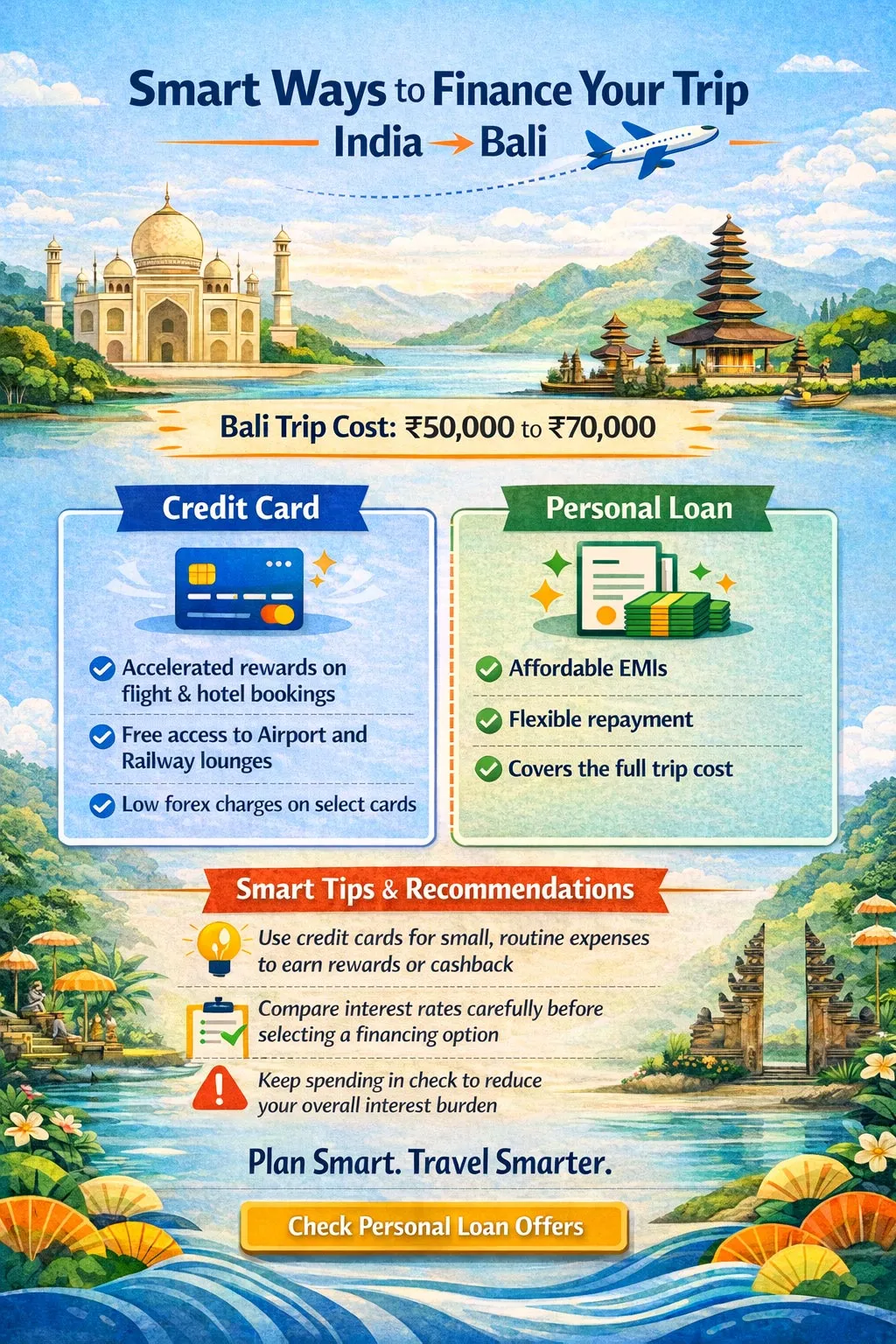
Planning a Bali trip may require budgeting for flights, accommodation, local travel, and activities. Travellers often use different financial options to manage these costs.
For handling travel-related payments, credit cards may include the following features:
Rewards earning: Points may accumulate on bookings and international spends
Lounge access: Select cards provide entry to airport lounges
EMI conversion: High-value transactions can be split into instalments
Travel benefits: Some cards include insurance and currency-related features
Credit cards are commonly used for overseas travel, with benefits varying across card types and providers.
For managing upfront travel expenses, personal loans may offer the following aspects:
Flexible usage: Funds may cover flights, stays, and other travel needs
Unsecured option: No asset is typically required as collateral
Fixed repayment: Repayment is structured through monthly instalments
Quick processing: Disbursal timelines may be relatively shorter
Personal loans are one of the ways used to manage travel costs through planned repayment. Conditions, rates, and eligibility vary by lender.
Some of the best places to visit in Bali include temples, cultural sites, and trekking spots. You can also explore recognised UNESCO World Heritage sites.
This twin waterfall cascades from a height of 26 metres into the same pool. It is one of Bali’s most popular attractions. You can also visit Sekumpul Waterfall, the tallest waterfall in Bali.
This temple, built in 1633, is situated on Lake Beratan. It is renowned for ceremonies and offerings dedicated to Dewi Danu, the Balinese lake and river goddess.
This iconic gate is a popular photography spot, though it is often crowded. It is advisable to visit during quieter times for a more peaceful experience.
Recognised as a UNESCO World Heritage site, these cascading rice fields offer breathtaking views. Sunrise and sunset are ideal times to visit for photography.
Also known as the Gate of Heaven, this site consists of several smaller temples. It is frequently crowded, and visitors may have to wait around three hours for photographs.
This iconic seaside temple is entirely built of rock, making it a unique attraction.
This cultural hub of Bali is rich in art and tradition, making it a must-see destination for those interested in Balinese heritage.
This active volcano is a popular trekking site. Sunset treks are particularly favoured for their stunning views.
As a single traveller or couple, popular activities in Bali include trekking, exploring traditional arts, and enjoying experiences such as snorkelling. Additional enjoyable activities include:
Enjoy surfing at Kuta Beach
Diving and snorkelling at Nusa Penida and Nusa Lembongan
Ubud art market visit
Bali swing for scenic photos
Kecak fire dance watch
Sunrise hiking at Mount Batur
Breakfast with orangutans at Bali Zoo
Monkey Sacred Forest visit
The two best seasons to visit Bali from India are the dry season and the wet season. Depending on your preferences, you can plan your trip by checking the weather and temperature in these periods.
The dry season offers sunny weather and is ideal for experiencing beaches, diving, cultural events, and outdoor activities. Humidity is low, with minimal rainfall. Along Bali’s coastline, you can also enjoy water sports and surfing during this period.
The wet season is suitable if you prefer a lively atmosphere, with Bali’s nightlife and vibrant crowd being key highlights. Rainfall is usually brief, leading to lower accommodation prices, making this a more affordable time to visit.
To reduce costs on your Bali trip, consider strategies like opting for free activities and pre-booking accommodation for better deals. Some options include:
Travelling during the off-season when prices are lower
Preparing some meals yourself to reduce dining expenses
Booking accommodation in advance to secure better rates
Staying in guesthouses or budget hotels for affordable options
Choosing free or low-cost activities such as visiting beaches and temples
Using public transport like buses to save on internal travel
Bargaining in local markets to get better prices when shopping
Some of the most common tricks and scams in Indonesia that Indians encounter includes fake taxi scams, beach hustlers, fraudulent guides, and motorbike rental scams.
Taxi scams are prevalent, where drivers charge higher fares without using the meter. Some impersonate Bluebird taxis by painting their vehicles in the official colour, deceiving tourists and demanding inflated prices.
Certain money exchange kiosks are fraudulent, offering rates higher than the official international rate.
Low-quality products such as bracelets and hats are commonly sold on Bali’s beaches. Vendors, including children, pressure tourists into making purchases.
Unauthorised individuals at historical sites and temples may demand entrance fees or donations. These people are not affiliated with the sites and are attempting to defraud tourists.
Motorbike rental scams often involve owners using spare keys to steal rented bikes. Others falsely claim damages like scratches and demand additional fees.
Pickpocketing is a widespread issue faced by tourists. In Bali, it is essential to keep belongings secure to avoid falling victim to such theft.
Bali uses the Indonesian Rupiah (IDR) as its official currency. Prices often appear in higher numbers due to the denomination style of the Rupiah.
| Indonesian Rupiah (IDR) | Indian Rupee (INR) |
|---|---|
1,000 IDR |
₹5.30 |
10,000 IDR |
₹53.00 |
50,000 IDR |
₹265.00 |
100,000 IDR |
₹530.00 |
500,000 IDR |
₹2,650.00 |
Expense Conversion: An Example
Bali follows the Indonesian Rupiah for all daily transactions, and the exchange rate helps relate the larger‑digit prices to Indian Rupees. As of 16th April 2026, 1,000 IDR is roughly equal to ₹5.3. A café meal priced at 60,000 IDR would be around ₹320, while a local transport ride costing 25,000 IDR would be about ₹130. A hotel charging 700,000 IDR per night would convert to close to ₹3,700. Looking at Rupiah amounts in INR helps understand typical costs during a visit to Bali.
Disclaimer: The exchange rate used in this example is indicative and based on the information available on 16th April 2026. Actual rates may vary depending on the bank, forex provider, applicable fees, and the date of transaction.


Reviewer
The cost of a trip to Bali depends on your preferences. For a budget-friendly trip, you can plan around ₹55,000. A mid-range trip may cost up to ₹75,000, while a luxurious experience can exceed ₹1 Lakh.
A 7-day trip to Bali costs between ₹35,000 and ₹40,000for a single person.
Yes, Indian tourists require a visa on arrival to Bali. The E-VOA service is available for stays of 14 to 30 days and can be extended for an additional 30 days.
The most affordable time to visit Bali is during the off-season, usually between October, November, February, and March.
Yes, ₹2 Lakhs is sufficient for a well-planned Bali trip. Strategies like pre-booking can help keep expenses under ₹1.30 Lakhs.






 Academy