Our Products
 Loans
Loans
 Cards
Cards
 Insurance
 Investment
 Stock Market
 Electronics Mall
 CIBIL Score
 Knowledge Centre
 Calculators
Our Services

 Do not call
 En
En
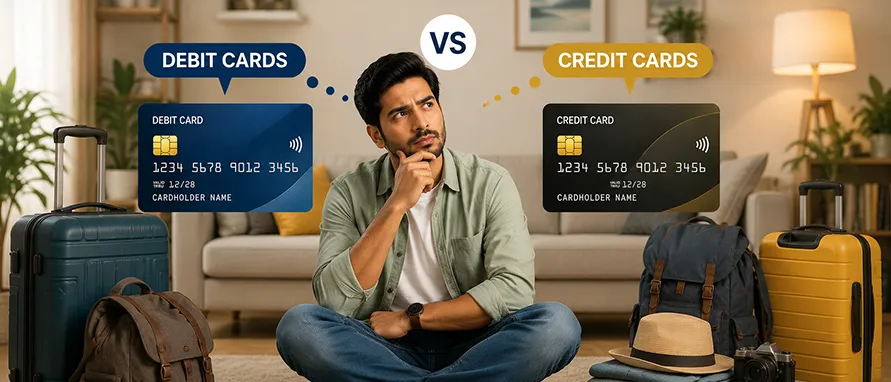
Table of Contents
Planning a trip abroad often raises one question: should you carry a debit card, a credit card for travel, or both? A debit card lets you spend money directly from your bank account, which helps you track expenses and avoid debt. A credit card gives you access to a credit limit, along with travel rewards and added protection against fraud. Knowing how each works helps you plan your spending abroad with confidence.
Both cards serve different purposes, and the right choice depends on your travel habits and priorities.
Debit Card
Credit Card
Many travellers now prefer travel credit cards, as these come with added perks like airport lounge access and reward points on travel spending.
If you're comparing options, here's a quick look at some travel-focused credit cards available in India, along with their fees and key benefits.
| Cards | Joining/Annual Fee | Benefits |
|---|---|---|
SBI Card ELITE |
₹4,999 |
|
SBI Card PRIME |
₹2,999 |
|
IDFC FIRST Bank Wealth Credit Card |
Nil |
|
SBI Card MILES |
₹1,499 |
|
Tata Neu Plus HDFC Bank Credit Card |
₹499 |
|
BPCL SBI Card OCTANE |
₹1,499 |
|
IndiGo SBI Card |
₹1,499 |
|
Kotak League Platinum Credit Card |
Nil |
|
IDFC FIRST Bank SELECT Credit Card |
Nil |
|
SBI IRCTC RuPay SBI Card |
₹500 |
|
Disclaimer: Fees, rewards, and eligibility criteria may change based on the issuer's terms, so check the latest details before applying.
Carrying both a debit and a credit card gives you flexibility and backup options during your trip abroad. Each card suits a different travel concern, so using them together often works best.
A debit card suits travellers who want to control their spending and stick to a fixed budget, since it draws directly from their bank balance. This makes it harder to overspend and keeps daily expenses in check.
A credit card suits travellers who prioritise security and fraud protection, since it doesn't expose their bank savings directly. It also offers travel rewards, purchase protection, and access to emergency credit if your debit card faces issues abroad.
Before you travel, understand the fees that apply to each card type:
Both work well together. A debit card helps you control spending, while a credit card offers stronger fraud protection and travel rewards. Carrying both gives you flexibility abroad.
Yes, most debit cards work internationally, provided your bank has enabled international usage on your card. You can withdraw cash and make purchases, though fees may apply.
Yes, credit cards generally work abroad if the issuer has enabled international transactions. Check your foreign transaction fee and credit limit before you travel.
A credit card is generally safer, since it doesn't draw directly from your bank account. If fraud occurs, your savings stay protected while the issue gets resolved.
Charges vary by issuer and card variant. Some credit cards, especially premium travel cards, offer lower forex mark-up fees than standard debit cards, so compare rates before you travel.


Most Viewed

Academy by Bajaj Markets

 47202
47202

Navigate the tax maze with ease! Uncover Income Tax 101, demystify jargon with Terms for Beginners, and choose between Old or New Regimes.
 165541
Unlock the world of credit! From picking the perfect card to savvy loan management, navigate wisely.
 97881
97881
Money Management and Financial Planning covers personal finance basics, setting goals, budgeting...
 28606
28606
Explore the investment cosmos! From beginner's guides to sharp-witted strategies, explore India's treasure trove of options.
 18764
18764
Discover essential insights on various types of insurance in India.
 4584
4584
Welcome to Tech in Finance, where we explore the exciting intersection of technology and finance...












 Academy