Our Products
 Loans
Loans
 Cards
Cards
 Insurance
 Investment
 Stock Market
 Electronics Mall
 CIBIL Score
 Knowledge Centre
 Calculators
Our Services

 Do not call
 En
En
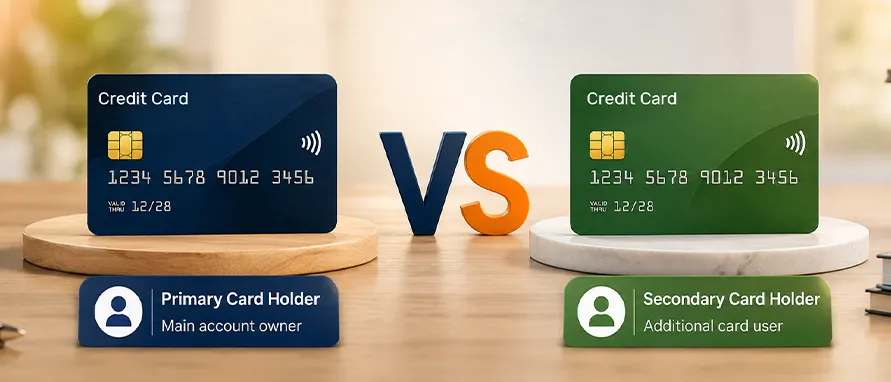
Table of Contents
A primary cardholder owns and manages the main credit card account, including its credit limit, billing, and repayment terms. A secondary cardholder generally uses an add-on credit card, a supplementary card linked to the primary account. Understanding these roles helps you choose the right option and manage shared credit responsibly.
The primary cardholder applies for and receives the main credit card. This individual owns and manages the credit card account, including its credit limit, interest rate, and terms of use.
The primary holder handles all bill payments and remains responsible for any outstanding dues, even those an add-on cardholder incurs. They also control account-level actions, such as requesting a credit limit increase, adding or removing supplementary cards, or closing the account entirely.
Issuers often call a secondary credit card holder an add-on, supplementary, or authorised cardholder, depending on their terminology. This person receives a card linked directly to the primary account and can use it to make purchases within the assigned limit.
Secondary cardholders usually don't own the underlying credit account. They can't change account terms, request limit increases, or close the account. Their spending simply draws from the primary account's shared credit limit.
Paying the Credit Card Bill
The primary holder must clear the full credit card bill each cycle, including charges any secondary cardholder makes on the account.
Spending Limits
The primary holder sets and monitors the overall credit limit, which secondary cardholders share unless the issuer allows separate sub-limits.
Credit Score Impact
All transactions on the account, including those by secondary users, affect the primary holder's credit score, since the account reports under their name.
Access to Rewards
The primary holder typically earns and redeems rewards, cashback, or points that build up across both primary and secondary card usage.
Responsible Usage
Secondary cardholders should spend within reasonable limits and avoid overspending, since their transactions directly affect the primary account's outstanding balance.
Spending Controls
Many issuers let primary holders set a separate spending limit for each secondary card, helping manage overall credit card bills more effectively.
Impact on Primary Holder's Credit
Irresponsible spending by a secondary cardholder can increase the primary holder's credit utilisation and outstanding dues, indirectly affecting their credit score.
Primary cardholder: Choose this option if you want full control over the credit account, including its limit, billing, and rewards. This role suits individuals who want to build their own credit history and manage repayments independently.
Secondary/add-on cardholder: Choose this option if you want the convenience of a credit card without applying separately, such as a spouse or family member sharing the primary account. This suits those who prefer simpler access without account-level responsibilities.
The primary holder owns and manages the credit card account, while the secondary holder uses an add-on card linked to that account without owning it independently.
Yes, a secondary or add-on card draws credit from the primary account's shared limit and reports transactions under the primary holder's name.
The primary cardholder pays the full bill, including charges the secondary cardholder makes, since both cards share one account.
Yes, all transactions on the secondary card affect the primary holder's credit utilisation and repayment history, since the account reports under their name.
Some issuers allow primary holders to set a separate spending limit for each secondary card, though this draws from the same overall account limit.


Most Viewed

Academy by Bajaj Markets

 47202
47202

Navigate the tax maze with ease! Uncover Income Tax 101, demystify jargon with Terms for Beginners, and choose between Old or New Regimes.
 165541
Unlock the world of credit! From picking the perfect card to savvy loan management, navigate wisely.
 97881
97881
Money Management and Financial Planning covers personal finance basics, setting goals, budgeting...
 28606
28606
Explore the investment cosmos! From beginner's guides to sharp-witted strategies, explore India's treasure trove of options.
 18764
18764
Discover essential insights on various types of insurance in India.
 4584
4584
Welcome to Tech in Finance, where we explore the exciting intersection of technology and finance...












 Academy