Our Products
 Loans
Loans
 Cards
Cards
 Insurance
 Investment
 Stock Market
 Electronics Mall
 CIBIL Score
 Knowledge Centre
 Calculators
Our Services

 Do not call
 En
En
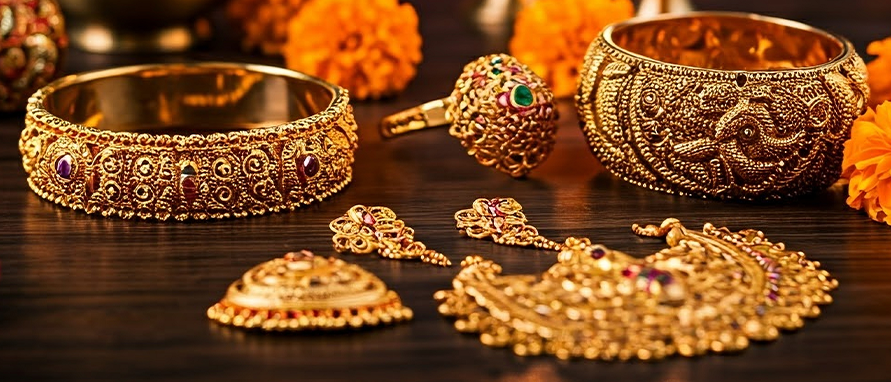
Known as the Festival of Lights, Diwali celebrates the victory of light over darkness and good over evil. It marks Lord Rama's return to Ayodhya after defeating Ravana. It is a cornerstone of Indian culture that brings people together.
The Diwali season is an auspicious time to buy gold. The festival is also linked closely to Goddess Lakshmi, who is believed to have emerged from the ocean of milk with a pot of gold. Buying gold during Diwali represents inviting fortune and abundance into your life.
Diwali is an excellent time to invest in gold due to its spiritual and financial significance. Here are some of the reasons why this purchase is of note on Diwali:
Buying gold during Diwali is believed to attract prosperity. It is associated with Goddess Lakshmi, who is the symbol of wealth.
Many jewellers offer special deals and discounts when you buy gold on Diwali. Purchasing gold is a smart financial choice during this season.
Gold has consistently proven to be a stable asset. Its cost often appreciates in the long run, providing both safety and potential growth.
Gifting gold during Diwali is a cherished tradition. It symbolises love, respect, and wishes for a prosperous future.
Increased demand for gold during Diwali often leads to a rise in value. That makes it an ideal time for a long-term investment.
Buying gold during Diwali is a wise investment. Families buy gold to honour the Goddess Laxmi, hoping to invite prosperity and happiness into their lives. Among the auspicious days in the Diwali season, Dhanteras is one of the best for purchasing gold.
In Hindu tradition, choosing the correct ‘muhurat’ is beyond mere timing. It honours ancestral wisdom and adds significance to important moments. The timings follow the Hindu lunar calendar and mythological calculations.
The best times to buy gold during Dhanteras are:
| Window | Timings |
|---|---|
Pradosh Kaal |
05:54 PM to 08:22 PM |
Vrishabha Kaal |
06:55 PM to 08:57 PM |
Trayodashi Tithi |
10:31 AM on October 17, 2025 to 01:15 PM on October 23, 2025 |
In addition to Dhanteras, Diwali Amavasya is also an excellent day for buying gold during the Diwali season.
With the right knowledge, you can make a wise and valuable purchase. Here’s what you need to know during your Diwali gold purchase:
The rate of gold can fluctuate due to many factors. These include demand and supply, government policies, inflation, and exchange rates. If you plan to purchase gold on Diwali, keeping track of the gold prices can help you get this precious metal at the best rates.
Checking gold’s purity is also important since gold valuables are available in different carats. The 24-carat gold is purer than 22-carat gold. However, most gold items are made using the 22-carat specification. To ensure the purity of your asset, check the BIS or hallmark engraving.
Jewellers and artisans use their skills to turn the gold into jewellery. Jewellers apply a making charge to compensate for this labour, increasing its cost. To get the gold at a lower cost, look for a jeweller that charges a lower making charge.
You need to pay GST on gold jewellery as well as gold bars since they are considered ‘Goods’ under the GST rules and regulations. The current GST rate for gold is 3%. You need to pay this tax in addition to the cost of the item. Therefore, checking the current rules can help you plan your purchase better.
It is important that you choose a trustworthy and reputable jeweller to purchase the gold items on Diwali. This ensures you do not get bars or coins that contain other metals mixed in with gold that reduce the value.
Remember to get the gold certificate and invoice, and enquire about the return policy, too.
A gold loan lets you make the most of the gold you purchase during Diwali. After buying your gold, you can use it to secure a loan. That gives you quick access to cash without having to sell your gold.
You can find many lenders offering attractive interest rates on gold loans. You can borrow against its current market value by pledging your gold as collateral. This way, you can keep your gold while accessing funds for business, education, or personal expenses.
Most lenders provide flexible repayment terms. You can choose a repayment schedule that fits your needs. Qualifying for these loans is also easier than unsecured loans.
The market dynamics during pre-Diwali and post-Diwali periods can impact gold prices and loan offerings. Here’s a comparison to help you make informed decisions:
| Aspect | Pre-Diwali | Post-Diwali |
|---|---|---|
Gold Prices |
|
|
Loan Options |
|
|
Predicting gold rates around Diwali is a blend of art, science and market intuition. While nobody can forecast prices with perfect accuracy, financial analysts, economists and traders use several tools and indicators to estimate where gold might trade during the festive period. Below is an overview of how these predictions are made, and what readers should keep in mind.
To begin with, forecasters rely on a set of primary variables that historically affect gold prices. These include:
Gold is often seen as a hedge against inflation. When inflation rises and real interest rates (interest rates minus inflation) fall, gold becomes more attractive. Conversely, if real rates climb, the opportunity cost of holding non-yielding gold rises, potentially pulling the price down.
Actions by central banks, especially the U.S. Federal Reserve, matter a lot. Policies shifting toward rate cuts or easing tend to support gold prices. Also, central banks’ direct gold purchases (or reductions) influence global supply and demand sentiment.
Because gold is globally priced (often in U.S. dollars), fluctuations in the dollar or in the domestic currency (for Indian buyers, the rupee) play a crucial role. A weaker rupee or weaker dollar often supports higher domestic gold rates.
Political instability, trade disputes, wars, or crises can drive safe-haven demand for gold. Forecasts often incorporate risk-scenarios around these events.
On the demand side, jewellery consumption, investment demand (ETFs, funds) and seasonal demand (e.g. during festivals or weddings) matter. On the supply side, mining output, recycling of gold and import policies affect available supply.
As we compare gold prices from Diwali 2024 with the run-up to Diwali 2025, distinct shifts in trend and premium behaviour emerge.
Below is a detailed look at the key differences and what drives them:
| Comparison Aspect | 2024 Diwali Period | 2025 Diwali Period | What’s Different / Notable |
|---|---|---|---|
Base Price Level |
₹ 78,000–80,000 per 10g (24K) (approx.) |
₹ 1,20,000–1,30,000+ per 10g (24K) (approx.) |
The base is far higher in 2025, so gains are on a steeper curve |
Year-on-Year Rise |
30%+ increase from previous Diwali (approx.) |
50–60%+ rise globally year-on-year (in USD terms) (approx.) |
The magnitude of price movement is larger in 2025 |
Demand Premiums / Margins |
Typical festival uplift and jewellery demand |
Very high premiums, supply tightness, smuggling pressures |
Higher stress on supply chains in 2025 |
Risk & Volatility |
Elevated, but within historical norms |
Higher volatility and risk of sharp corrections |
Wider forecast error margins needed |
Disclaimer: The figures and comparisons in the above table are based on available historical data, estimations, and published market reports. They should not be taken as guarantees or predictions of future performance. Actual gold prices may vary due to unforeseen market factors, policy changes, global events or data revisions. Readers are advised to cross-verify values from independent, real-time sources and not to rely solely on this comparison for financial or investment decisions.
Gold prices during Diwali 2025 are being shaped by a combination of global pressures and domestic market realities. Several India-specific factors are contributing to the sharp rise seen this festive season:
The overlap between Diwali and the Indian wedding season has intensified jewellery purchases. Retailers are reporting stronger pre-bookings and advance orders, pushing short-term demand higher than usual.
Import restrictions, supply chain delays, and increased logistics costs have led to reduced availability of physical gold. This has caused Indian gold to trade at a premium of over ₹4,000–₹6,000 per 10 grams above global rates in some regions.
The sharp price rise has driven a parallel increase in unofficial imports. According to recent reports, gold smuggling into India has surged ahead of Diwali 2025, affecting both availability and official pricing structures.
Persistent geopolitical uncertainty, high inflation in major economies, and expectations of interest-rate cuts have lifted global gold prices above USD 4,100 per ounce, a key factor behind India’s record prices.
Indian gold ETFs saw record inflows this year, adding financial-market pressure on spot prices. Institutional investors are treating gold as a stable hedge against global volatility.
With import duty still at 15% and GST at 3%, buyers are paying a higher landed cost compared to previous years. These taxes also contribute to widening the gap between domestic and international gold rates.
Many consumers are buying early, fearing further price hikes. This “buy-now” sentiment fuels a self-reinforcing demand cycle during the Diwali window.
During the Diwali window, gold doesn’t move in a straight line. Prices bounce, pause, reverse, all within hours or even minutes. To make sense of these movements, here are some dynamics that are especially relevant in this festival season:
A sudden order or large purchase in one city can trigger ripple effects across markets. As one dealer hikes the rate, others follow, creating a short-term cascade. This is often amplified by algorithmic or automated trading which reacts to breakout thresholds.
Outside normal business hours (early mornings, late nights), fewer traders are active. If a large order comes in with limited counter-orders, price jumps are more pronounced. Thin liquidity magnifies swings.
The bid-ask spread (the difference between buying and selling price) tends to widen rapidly in volatile sessions. Dealers may raise their margins to buffer risk exposure, making visible price changes more abrupt.
Many traders watch key levels (e.g. ₹1,29,000, ₹1,30,000) as psychological or technical triggers. Breaching such levels can invite fresh stops, momentum trades or panic entries, which exacerbate fluctuations.
When international spot prices move quickly, local physical supply (imports, shipments) may lag due to customs, transport or storage delays. The delay in arbitrage can lead to divergences and rapid catch-up adjustments.
A small uptick can increase premium (markup over spot), which in turn spurs more demand—especially from buyers fearing further rise. That additional demand pushes price further, reinforcing the loop until friction (e.g. supply limit) stops it.
Even in a broadly upward trend, intra-day reversals occur as traders take profits. A sharp rise may trigger selling into strength, causing momentary drops before the broader trend resumes.
Unexpected policy statements, customs delays, currency announcements or even rumours can hit during Diwali days. Because many participants are watching closely, such shocks can induce sharper-than-usual reactions.
Across India, festivals play a powerful role in shaping how people buy, gift, and invest in gold. During times like Diwali, Dhanteras, Akshaya Tritiya, and regional harvest festivals, gold demand often rises sharply. This creates visible shifts in prices and market sentiment.
Gold holds deep emotional and spiritual value in Indian households. Festivals are seen as auspicious times to buy gold, symbolising prosperity and new beginnings. This cultural tradition consistently lifts jewellery sales and gold investments, creating predictable seasonal spikes each year.
During festivals, millions of small retail transactions happen simultaneously across India. The cumulative effect of this surge in consumer demand leads to short-term price increases, especially in physical gold markets. Jewellers often adjust daily prices to reflect local demand patterns.
With high demand and limited supply, dealers and retailers add a premium over the international spot price. These premiums can widen further if import flows slow down or when domestic logistics become strained during festive peaks.
Jewellery brands and banks offering digital gold or coins launch promotions, adding momentum to buying activity. Although discounts may appear to offset costs, overall demand still lifts average prices due to higher transaction volumes.
Many investors view festivals as an auspicious time to start systematic gold investments, buy sovereign gold bonds, or add to existing holdings. This financial participation extends price support even beyond the festive period.
Festivals in India do not coincide with international market holidays. As a result, global spot movements during these local holidays can cause sudden mismatches, prompting quick domestic adjustments once trading resumes.
While festival demand primarily creates short-term price spikes, it can also influence longer-term trends. Persistent festive buying keeps India among the world’s top gold consumers, sustaining overall global demand and helping maintain gold’s upward trajectory over time.
As Diwali draws near, many households tap into gold loans for liquidity, making the prevailing interest rates all the more relevant. Below is a table of indicative gold-loan interest rates from select institutions during this festive period:
| Institution | Indicative Interest Rate (p.a.) |
|---|---|
Bajaj Finance |
9.50 % onward |
IIFL Finance |
11.88 % onward |
indiagold |
10.20 % onward |
Muthoot Fincorp ONE |
11.99 % onward |
Rupeek |
9.48% onward |
Fedfina |
12% onward |
Disclaimer: These interest rates are indicative only (as of late 2025) and represent publicly published ranges. Actual gold-loan interest rates offered to you may differ depending on your location, the purity and valuation of the pledged gold, loan tenure, credit profile, and lender’s current policy. Always verify the up-to-date rate directly with the lender before proceeding.
Experts anticipate further upside in gold, citing strong festival demand, a weak rupee, and persistent global uncertainty. Some forecasts suggest domestic rates could approach or exceed ₹1,30,000 per 10 g (24K) depending on premium levels, barring a sharp policy shift.
Analysts use econometric and multivariate models combining inflation, interest rates, currency movements, global demand, and past seasonal trends. They also overlay judgement for festival demand, duty changes or geopolitical surprises to refine forecasts.
Around Diwali, prices swing due to surging physical demand, shifting premiums, intraday currency volatility, profit-booking, and supply constraints. Market sentiment and emotional buying further amplify these fluctuations in short spans.
Buying gold before Diwali, especially on Dhanteras, is ideal. It is highly auspicious and symbolises prosperity. Many jewellers offer festive discounts and special schemes, making this a great time for buyers.
However, buying gold after Diwali can also be wise. Prices stabilise and decrease when festive demand drops. Each option has its benefits. You can choose to prioritise tradition or investment opportunities, or both.
Buying gold on Dhanteras is generally considered more auspicious than on Diwali. Dhanteras, celebrated two days before Diwali, represents wealth and prosperity. It is the ideal day for gold purchases. Buying gold on Diwali is also favourable, especially during the Lakshmi Pujan Muhurat.
Ultimately, your choice depends on personal beliefs. Both days offer excellent opportunities to invest in gold while honouring tradition and inviting prosperity.
During Diwali, you can obtain quick funds through gold loans by pledging your jewellery or coins as collateral. Lenders assess your gold's purity and value, offering a loan based on its current market price.
The festive season often brings special offers. Some of these include lower interest rates and flexible repayment options. That helps you access funds for festive purchases while keeping ownership of your gold until you repay the loan.



Academy by Bajaj Markets

 47201
47201

Navigate the tax maze with ease! Uncover Income Tax 101, demystify jargon with Terms for Beginners, and choose between Old or New Regimes.
 165300
Unlock the world of credit! From picking the perfect card to savvy loan management, navigate wisely.
 97872
97872
Money Management and Financial Planning covers personal finance basics, setting goals, budgeting...
 28591
28591
Explore the investment cosmos! From beginner's guides to sharp-witted strategies, explore India's treasure trove of options.
 18763
18763
Discover essential insights on various types of insurance in India.
 4583
4583
Welcome to Tech in Finance, where we explore the exciting intersection of technology and finance...












 Academy