Our Products
 Loans
Loans
 Cards
Cards
 Insurance
 Investment
 Stock Market
 Electronics Mall
 CIBIL Score
 Knowledge Centre
 Calculators
Our Services

 Do not call
 En
En
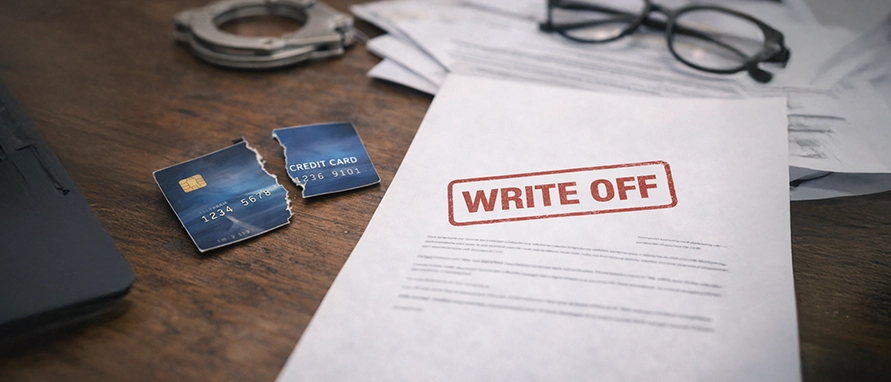
Table of Contents
Understand the process and implications of writing off credit card debt in India.
A credit card write-off occurs when the issuer determines that your outstanding debt is unlikely to be recovered and removes it from their financial records. However, this action does not erase the debt—you are still responsible for repayment.
The meaning of credit card write-off is that the issuer categorises your unpaid debt as a loss. The issuer no longer considers the debt recoverable. However, this does not mean the debt is forgiven. Although the debt is removed from the issuer's books, you remain obligated to repay it.
It is primarily an accounting process that removes the debt from the issuer's balance sheet, but you are still liable for the outstanding amount.
In India, a credit card write-off typically happens after 180 days of non-payment. The issuer will first attempt to collect the debt, but if unsuccessful, they will write it off. The issuer may pass the debt to a collection agency.
A credit card write-off usually happens when the issuer determines that the debt is unlikely to be recovered.
The common reasons for this include:
If you fail to make payments for an extended period (typically 180 days), the issuer may decide to write off the debt
If the issuer’s attempts to recover the debt, through calls or reminders, are unsuccessful, they may decide to write it off
In cases where a cardholder experiences financial difficulties, such as job loss or major expenses, resulting in an inability to repay the debt
If the issuer believes the amount is unmanageable and attempts to recover it have been exhausted, the debt may be written off
A credit card write-off has serious implications for your credit score and overall financial health. Here’s how it affects you:
Once the debt is written off, it is reported to credit bureaus, significantly lowering your credit score
The write-off remains on your credit report for several years, which makes it harder for you to obtain new credit in the future
Due to the negative mark on your credit report, future lenders may hesitate to offer you loans, credit cards, or other financial products
If you apply for loans (personal, home, or vehicle loans), the write-off may affect the approval process, as it reflects a past inability to repay a debt
In short, a credit card write-off can harm your financial reputation for a long time, impacting your ability to secure future credit.
While you cannot directly request a credit card write-off, there are steps you can take to manage your debt before it is written off by the issuer. In case your debt is written off, it can have long-term impacts on your credit score.
Here’s how you can approach the situation:
Before taking any action, evaluate your finances to determine if seeking a credit card debt settlement or restructuring your debt is a better option. These solutions may help you avoid the negative impacts of a write-off.
Reach out to your credit card issuer to explain your financial situation. Be honest about your inability to repay the full amount. You may be able to work out an alternative repayment option, such as a reduced settlement or a restructured payment plan.
If you’re unable to pay the full balance, you can negotiate a settlement. In some cases, issuers may agree to accept a lower lump-sum payment to close the account, writing off the remaining balance. Be prepared to offer a reasonable amount that you can afford.
If a settlement is not an option, consider requesting a payment plan. Issuers may allow you to repay the debt in smaller, more manageable instalments, often at a reduced interest rate, which can prevent the need for a write-off.
Once you have made arrangements with the issuer, follow up with a formal written agreement. This will ensure you have a record of your new repayment terms or settlement.
If you are negotiating a settlement or cancelling your credit card, a well-written letter is essential. Here’s how to write it:
Address the letter to the relevant department or your account manager at the issuer.
Begin by explaining that you wish to either cancel your credit card or settle the debt. Clearly mention your intention to reach a resolution.
Briefly describe your financial difficulties and why you are unable to pay the full amount. If applicable, mention any prior discussions or promises made by the issuer.
If settling, propose a lump-sum payment or a reduced amount to close the debt. If cancelling, request confirmation of the closure of your account and ensure there are no further charges.
Ask for a written confirmation of the settlement or cancellation request and provide your contact details for any further communication.
Here’s a basic template to help you understand how to write a credit card cancellation or settlement letter:
[Your Name]
[Your Address]
[City, State, PIN Code]
[Date]
[Issuer Name]
[Issuer Address]
[City, State, PIN Code]
Subject: Request for Credit Card Settlement or Cancellation
Dear [Issuer Name],
I am writing to formally request the settlement of my credit card debt under account number [account number], or to request the cancellation of my credit card due to [state reason].
Due to [briefly explain the reason, such as financial hardship, job loss, etc.], I am unable to continue with my current payments. I would like to offer a settlement amount of [state amount] to clear the debt or request that my card account be closed, effective immediately.
Please confirm the terms of the settlement or the closure of my account at your earliest convenience. Thank you for your understanding and prompt attention to this matter.
Sincerely,
[Your Name]
This letter should be sent via registered post or email to ensure proof of delivery. Keep a copy for your records.
In India, the process of writing off credit card debt involves legal procedures, especially if the issuer decides to take further action to recover the debt.
Here’s a breakdown of the legal steps involved:
After a credit card write-off, the issuer may initiate debt recovery proceedings. This can involve sending the debt to collection agencies or pursuing legal action against the debtor.
In cases where recovery through collection agencies fails, the issuer can approach a debt recovery tribunal (DRT). The tribunal can issue a recovery order, and failure to comply can lead to further legal actions, including property seizure or wage garnishment.
The write-off and any subsequent legal proceedings will affect your credit history, which will be visible to future lenders and financial institutions.
If a legal case is filed, you may have the option to negotiate a settlement before the court hearing. It’s often better to settle than to let the case go to trial, as it could lead to more severe consequences.
While the legal process is lengthy and often costly for the issuer, it can lead to additional financial and legal stress for the debtor. If you're in this situation, it's wise to consult with a legal advisor to understand your rights and options.
If you are struggling with credit card debt, there are alternatives to writing it off. Here are some options you can consider:
Instead of waiting for the issuer to write off the debt, you can negotiate a settlement. This typically involves offering to pay a lump sum amount that is less than your total outstanding balance, with the issuer agreeing to write off the rest.
If you're able to make smaller payments but not the full amount, you can request your issuer to restructure the debt. This might include reducing your monthly payments or extending the repayment term.
If you have multiple credit card debts, consolidating them into one loan with a lower interest rate can make repayment easier. You’ll only have to manage one monthly payment instead of multiple, reducing the financial burden.
If your credit score is still in good shape, you may qualify for a personal loan to pay off your credit card debt. This option is helpful if you need to pay off a large sum at once, and the loan’s interest rate is lower than your credit card’s.
To prevent your credit card debt from being written off, it’s important to manage your finances responsibly. Here are some tips to help you avoid the long-term consequences of a write-off:
Make sure to make at least the minimum payment every month to avoid missing payments. Setting up automatic payments or reminders can help you stay on track.
Keep your credit utilisation ratio under 30% of your credit limit to prevent overspending. High balances increase your debt and make it harder to pay off.
Tracking your income and expenses will help you avoid unnecessary spending. Stick to a budget to ensure you can pay off your credit card bills without stretching your finances.
If you’re struggling to manage your credit card payments, a professional credit counsellor can provide guidance on handling debt and improving your financial situation.
If possible, pay more than the minimum required payment. This will help reduce your debt faster and lower the chances of a write-off.
By being proactive and managing your credit responsibly, you can avoid the risk of a credit card write-off and maintain a healthy financial record.
Writing off credit card debt in India typically involves the issuer deciding that the debt is unlikely to be recovered. While you cannot directly request a write-off, you can negotiate a settlement or seek other debt relief options.
A credit card write-off is when the issuer removes your debt from their books because it’s considered a loss. However, you’re still responsible for repaying the debt.
A credit card write-off can severely damage your credit score and remain on your credit report for several years, making it harder to obtain new credit in the future.
To request a write-off, you’ll need to contact your card issuer, explain your financial difficulties, and request a review of your account. Keep in mind that it’s unlikely to be approved unless you meet specific criteria.
When writing a credit card cancellation or settlement letter, clearly state your intent, explain your financial situation, and propose a settlement amount or request closure of the account.
If the debt is written off, the issuer may initiate legal proceedings through debt recovery agencies or a debt recovery tribunal. This could lead to further actions like property seizure or wage garnishment.
Avoid debt write-offs by paying your credit card bills on time, keeping your balance low, creating a budget, and seeking professional help if needed.


Most Viewed

Academy by Bajaj Markets

 47202
47202

Navigate the tax maze with ease! Uncover Income Tax 101, demystify jargon with Terms for Beginners, and choose between Old or New Regimes.
 165541
Unlock the world of credit! From picking the perfect card to savvy loan management, navigate wisely.
 97881
97881
Money Management and Financial Planning covers personal finance basics, setting goals, budgeting...
 28606
28606
Explore the investment cosmos! From beginner's guides to sharp-witted strategies, explore India's treasure trove of options.
 18764
18764
Discover essential insights on various types of insurance in India.
 4584
4584
Welcome to Tech in Finance, where we explore the exciting intersection of technology and finance...












 Academy