Our Products
 Loans
Loans
 Cards
Cards
 Insurance
 Investment
 Stock Market
 Electronics Mall
 CIBIL Score
 Knowledge Centre
 Calculators
Our Services

 Do not call
 En
En
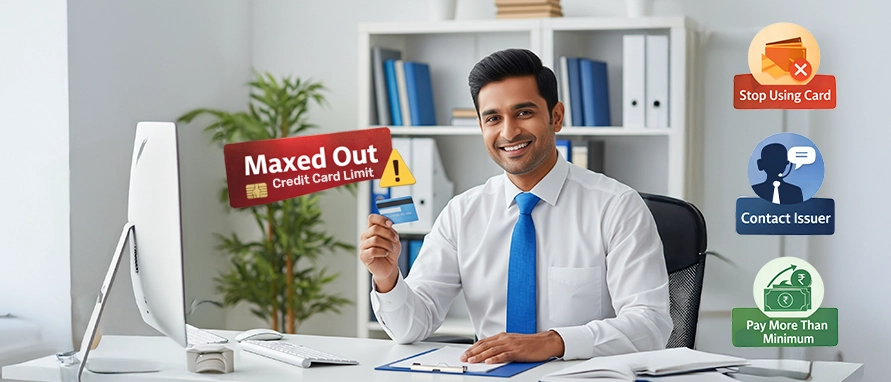
Table of Contents
Learn how to understand, manage, and recover from a maxed out credit card situation while protecting your credit score and regaining financial control.
Reaching your credit card limit can feel unsettling, especially when routine expenses still need attention. A maxed out credit card often signals that spending and repayments have moved out of balance, even if this happens gradually. In India, where credit cards are widely used for everyday payments, understanding how limits work and how utilisation affects your financial profile becomes essential. With the right approach, you can regain control, reduce pressure on your monthly budget, and protect your long-term credit health.
A maxed out credit card indicates that you have used almost all, or all, of the credit limit assigned to your card. This situation can develop quietly over time and often affects more than just your immediate spending ability.
When your outstanding balance reaches close to your sanctioned limit, your available credit drops to zero or near zero. This restricts further spending and might also limit your ability to handle emergencies. High utilisation levels are closely monitored in credit assessments.
Credit utilisation refers to the percentage of your total credit limit that you are using. When this ratio rises above commonly accepted thresholds, it may indicate higher credit risk. Credit bureaus factor this ratio into score calculations, which means a consistently maxed out credit card could influence how lenders view your profile.
Many people become maxed out on credit cards due to small but frequent expenses such as fuel, groceries, or subscriptions. These amounts can add up quickly, especially if only minimum dues are paid. Over time, this increases balances without having enough room for repayment.
Once your card is fully utilised, repayment options narrow. Interest continues to accrue on the outstanding amount, and any delay in repayment can increase overall costs. This can create a cycle where credit cards are maxed out repeatedly, making recovery more challenging.
When credit cards are maxed out, the impact extends beyond a single billing cycle. Several financial and behavioural consequences may follow, affecting both short-term and long-term stability.
High utilisation is one of the key factors considered by credit bureaus when calculating credit scores. A maxed out credit card might signal credit dependence, which could reduce your score gradually. Even with timely payments, consistently high balances may pull down your profile.
Outstanding balances attract interest until fully repaid. When your balance is high, interest charges increase proportionately, raising your monthly dues. Over time, this could make it harder to reduce the principal amount, especially if only minimum payments are made, as explained in standard credit card interest guidelines.
With no available credit left, unexpected expenses must be handled through cash savings or other borrowing options. This loss of flexibility can increase stress and may push you towards costlier forms of short-term credit, further straining your finances.
Once you realise your credit card is fully utilised, taking timely and structured steps can help stabilise the situation and prevent further escalation.
Start by checking your latest statement to understand how much you owe, including interest and charges. This clarity helps you plan repayments more realistically. Financial advisors often recommend listing balances to regain control over high-credit situations.
Paying only the minimum due may keep the account active, but it slows down balance reduction. Paying slightly more, where possible, could help reduce interest accumulation. Even small increases in repayment amounts may shorten the repayment period.
Temporarily limiting discretionary expenses can free up funds for repayment. This does not mean cutting essentials, but reassessing lifestyle spending until your balance reduces. Such short-term restraint often makes long-term recovery easier.
Missing due dates can worsen an already tight situation. Automated reminders or standing instructions ensure timely payments, helping you avoid late fees and additional interest. Consistent payment behaviour also supports gradual improvement in your credit profile.
Lowering utilisation is a practical way to ease the strain of a maxed out credit card and improve how your credit profile appears over time.
The most direct way to lower utilisation is by paying down existing dues. Regular, planned repayments can gradually bring balances below critical levels. Credit education guidelines often suggest targeting utilisation reductions rather than focusing only on total debt.
If you hold more than one card, distributing spending rather than concentrating it on one account might help manage utilisation. However, this should be done cautiously to avoid increasing overall debt.
Closing a card reduces your total available credit, which can increase utilisation on remaining cards. Older accounts also contribute to credit history length. Keeping them active with minimal use could help maintain a balanced profile.
Tracking how much of your limit you use each month builds awareness. This habit allows you to adjust spending before your credit cards are maxed out again, supporting more controlled credit behaviour.
Preventing a repeat situation requires planning and consistent financial habits rather than reactive measures.
A budget helps align spending with income and repayment capacity. Allocating a clear limit for card usage can prevent overspending. Budgeting guidance in India often stresses matching credit use to predictable cash flows.
Many cards allow you to set usage alerts when you approach a certain percentage of your limit. These alerts act as early warnings, helping you pause before reaching a maxed out credit card position again.
Using your card shortly after the billing date provides a longer interest-free window. This timing can improve cash flow management and reduce the risk of balances piling up unexpectedly.
Regular reviews help you spot patterns that lead to overspending. Early identification of rising balances allows corrective action before credit cards are maxed out once more.
Balance transfers are sometimes considered when managing high-interest credit card balances, though they require careful evaluation.
A balance transfer involves moving outstanding dues from one card to another, often at a lower introductory interest rate. This can temporarily reduce interest costs, as outlined in general consumer credit practices.
Balance transfers may include processing fees and limited low-interest periods. Understanding these terms is crucial to avoid unexpected costs once the promotional period ends.
The interest savings from a transfer could be directed towards principal repayment. This approach may help you reduce a maxed out credit card balance faster if managed with discipline.
Using the transferred-to card for new purchases could recreate high utilisation. Keeping spending in check ensures the transfer serves its intended purpose of balance reduction.
Engaging with your card issuer might offer temporary relief, provided the conversation is approached thoughtfully.
In some cases, issuers may consider a limit increase based on repayment history and income stability. While this does not reduce debt, it could lower utilisation temporarily, as per common credit management norms.
Issuers may review certain charges if you have a consistent repayment record. Any adjustment could slightly reduce monthly outgo, easing short-term pressure.
Some issuers may suggest repayment plans that spread dues over manageable instalments. These arrangements could help you regain control without defaulting.
Transparent communication builds trust and may lead to practical solutions. Avoiding contact can limit available options when your credit cards are maxed out.
Reducing high balances sooner rather than later offers multiple long-term benefits beyond immediate relief.
Interest compounds over time. Paying off balances faster reduces the total interest paid, freeing up funds for other financial priorities, as highlighted in standard credit education resources.
Lower balances reduce utilisation, which may positively influence your credit score over time. Improvements are usually gradual but reflect disciplined repayment behaviour.
As balances fall, available credit increases. This restored flexibility can be useful for planned expenses, provided usage remains controlled.
Clearing a maxed out credit card can reinforce responsible financial behaviour. This experience often encourages more mindful credit use in the future.
There are situations where managing high balances alone may feel overwhelming, and external guidance could help.
If repayments consistently strain your monthly budget, professional advice may help you reassess obligations and options. Financial counselling frameworks often emphasise early intervention.
When you are maxed out on credit cards across several accounts, coordinating repayments becomes complex. Structured guidance could help prioritise and simplify repayment strategies.
Emotional distress linked to debt is a valid signal to seek support. Professional counsellors may help you approach the issue calmly and systematically.
If credit card debt is part of a broader financial imbalance, expert input might help you realign goals, spending, and savings. Such support focuses on stability rather than quick fixes.
High credit utilisation can lower your credit score because bureaus view heavy usage as greater risk, even when payments remain timely. Reducing balances could gradually improve your score over months, because credit bureaus weigh utilisation and consistent repayment behaviour when calculating ratings.
First, check your latest statement to confirm the exact balance, fees and the minimum due amount before planning payments carefully. Then, pay more than the minimum if possible and pause discretionary spending to free cash for faster immediate balance reduction.
A balance transfer could reduce interest for a limited period, making principal repayment more manageable if fees do not offset savings. Compare transfer fees, promotional durations and post-promotion rates before deciding, as the benefit might be temporary and conditional in many cases.
Yes, you could request a credit limit review; issuers may increase limits based on your repayment record and verified income. Contact customer support or use online banking tools to apply, and be prepared to share updated income documents if asked.
Paying down high balances swiftly reduces interest accumulation and lowers the long-term cost of credit compared with prolonged minimum payments. Lower balances may also help improve your credit utilisation ratio, which could gradually support a better credit score over several months.
Yes, you might benefit from professional advice when debt feels overwhelming or repayments strain your monthly budget significantly over several months. Advisors or certified counsellors may propose restructuring options, prioritised repayments and behavioural changes to help you regain control in a sustainable way.


Most Viewed

Academy by Bajaj Markets

 47202
47202

Navigate the tax maze with ease! Uncover Income Tax 101, demystify jargon with Terms for Beginners, and choose between Old or New Regimes.
 165541
Unlock the world of credit! From picking the perfect card to savvy loan management, navigate wisely.
 97881
97881
Money Management and Financial Planning covers personal finance basics, setting goals, budgeting...
 28606
28606
Explore the investment cosmos! From beginner's guides to sharp-witted strategies, explore India's treasure trove of options.
 18764
18764
Discover essential insights on various types of insurance in India.
 4584
4584
Welcome to Tech in Finance, where we explore the exciting intersection of technology and finance...












 Academy