Our Products
 Loans
Loans
 Cards
Cards
 Insurance
 Investment
 Stock Market
 Electronics Mall
 CIBIL Score
 Knowledge Centre
 Calculators
Our Services

 Do not call
 En
En
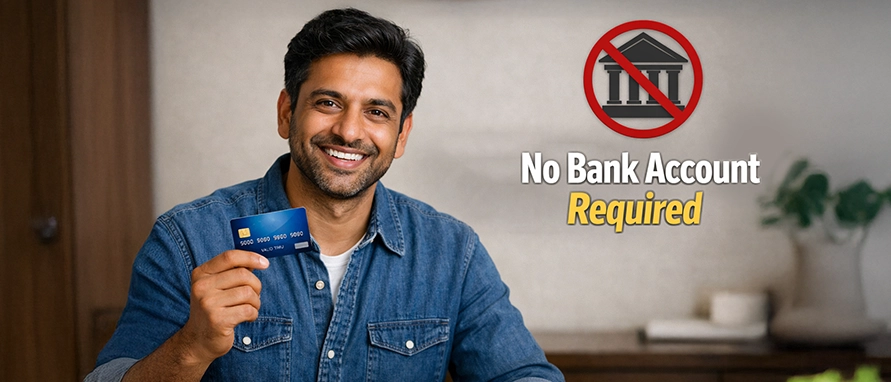
Table of Contents
Discover alternative ways to get a credit card without needing a traditional bank account, including prepaid, secured, and virtual options.
A credit card offers financial flexibility, allowing users to make purchases and pay later. Most credit cards are linked to a bank account for bill payments or salary verification. Several financial institutions and fintech companies now offer prepaid, secured, or virtual cards that do not require a traditional bank account. Such options cater to people who are unbanked, self-employed, or new to credit. Let’s explore how to get a credit card without a bank account and what choices are available in the financial marketplace in India.
If you are looking for a credit card without a bank account, there are alternative routes to consider. Banks and fintech firms offer products that do not require direct salary or savings account linkage.
You can get one by opting for:
Prepaid cards recharged using cash or digital wallets.
Secured credit cards backed by fixed deposits (FDs).
Virtual cards issued by fintech apps or NBFCs.
These options work well if you either don’t have a bank account or prefer to maintain financial independence from a primary bank.
Here are the main types of credit cards available without a bank account in India:
These cards are loaded with a specific amount that you can spend up to the assigned balance.
You can get them by pledging an FD with a bank or NBFC. The credit card limit depends on the FD value. The FD acts as collateral, reducing risk for lenders.
Financial platforms such as Slice offer free virtual credit cards without bank account linking. They operate digitally and are ideal for online payments.
Non-banking financial companies partner with payment networks to issue cards that function independently of traditional accounts.
The process for applying for a credit card without a bank account is simple and mostly digital.
Applicants must meet age and identity criteria, though a salary account is not mandatory.
A free virtual credit card without a bank account is becoming popular in India among young users and freelancers. These cards exist only in digital form and are primarily used for online purchases and subscriptions.
Apps like Slice, OneCard, and LazyPay issue free credit lines linked to your identity instead of a savings account. You can use them on e-commerce or payment platforms that accept Visa or Mastercard.
Advantages include easy setup, instant issuance, and no annual charges. While spending limits are modest, users can still build a credit record through timely repayments.
A credit card without a bank account works differently from traditional credit cards. Instead of linking to your salary or savings account, it relies on your financial credentials or security deposit.
Prepaid cards allow spending only up to the loaded balance, ensuring no overspending. Secured cards use your FD as backing, and repayments are adjusted through deposits or online transfers.
Virtual cards function with monthly usage limits approved by the issuer. You then repay using UPI, digital wallets, or third-party payment apps. This flexibility enables responsible borrowing without a typical banking relationship.
There are many reasons to choose a credit card without a bank account connection.
Such cards bring digital empowerment to people who otherwise rely solely on cash transactions.
Despite their benefits, without a bank account credit card options also have notable drawbacks.
If you're looking to get a credit card in India but don't have a bank account, there are several options available that can help you access credit and build your financial reputation. These alternatives include secured credit cards, prepaid cards, retail co-branded cards, and add-on cards. Here's a breakdown of each option:
Option 1: Secured Credit Cards Against FDs
Secured credit cards are a popular choice for individuals who don't have a bank account but wish to build or improve their credit score. These cards are backed by a fixed deposit (FD) that you open with a bank. The FD acts as collateral and determines your credit limit.
Pros and Cons
Secured credit cards are an excellent option for those just starting to build credit or with a low CIBIL score. Banks such as SBI, ICICI, and Bank of Baroda offer these cards with an almost guaranteed approval process, thanks to the collateral backing.
Option 2: Prepaid Cards as a Credit Card Alternative
Prepaid cards are a popular, easy-to-obtain alternative to credit cards in India. While they function like debit cards, they do not require a bank account. You load money onto the card and can spend it until the balance runs out.
Highlights of Prepaid Cards
Prepaid cards are great for small transactions like shopping, paying bills, or dining out, and they are safer than carrying cash. However, they do not help you build credit as they don’t report to CIBIL.
Option 3: Store-specific Credit Cards
Some retail or co-branded credit cards allow you to apply without a bank account, as long as you can use alternative payment methods for bill payments. These cards are typically issued by stores in collaboration with payment networks.
Potential Benefits
Potential Disadvantages
Retail or co-branded cards typically require basic ID proof (Aadhaar or PAN) and, in some cases, proof of address. Some stores may also accept cash payments or payments through UPI-linked wallets.
Option 4: Add-on or Supplementary Cards
Add-on or supplementary cards allow individuals, especially students or homemakers, to access credit through a family member’s credit card. This is a good option for those without a bank account.
How do Add-on Cards Work?
However, you will have the same credit limit as the primary cardholder, and your spending and credit history will depend on their payment habits. It's important to discuss spending limits and payment responsibilities with the primary account holder to avoid any misunderstandings.
No, a bank account is not mandatory. You can get prepaid, secured, or virtual cards from NBFCs and fintechs that work independently of savings accounts.
You can choose from prepaid cards, FD-backed secured cards, virtual cards, and NBFC co-branded credit cards.
Typically, Aadhaar, PAN, address proof, and a photograph are required. Some issuers may also request income or employment details.
Yes, several fintech providers offer virtual cards with no annual or joining fees. These cards work well for online transactions and digital purchases.
You load funds or get a pre-approved limit, then repay through digital channels like UPI or wallets. There is no direct bank account link.
Major benefits include inclusivity, controlled spending, and flexibility to make online payments even for people outside the formal banking system.


Most Viewed

Academy by Bajaj Markets

 47202
47202

Navigate the tax maze with ease! Uncover Income Tax 101, demystify jargon with Terms for Beginners, and choose between Old or New Regimes.
 165541
Unlock the world of credit! From picking the perfect card to savvy loan management, navigate wisely.
 97881
97881
Money Management and Financial Planning covers personal finance basics, setting goals, budgeting...
 28606
28606
Explore the investment cosmos! From beginner's guides to sharp-witted strategies, explore India's treasure trove of options.
 18764
18764
Discover essential insights on various types of insurance in India.
 4584
4584
Welcome to Tech in Finance, where we explore the exciting intersection of technology and finance...










 Academy