Our Products
 Loans
Loans
 Cards
Cards
 Insurance
 Investment
 Stock Market
 Electronics Mall
 CIBIL Score
 Knowledge Centre
 Calculators
Our Services

 Do not call
 En
En
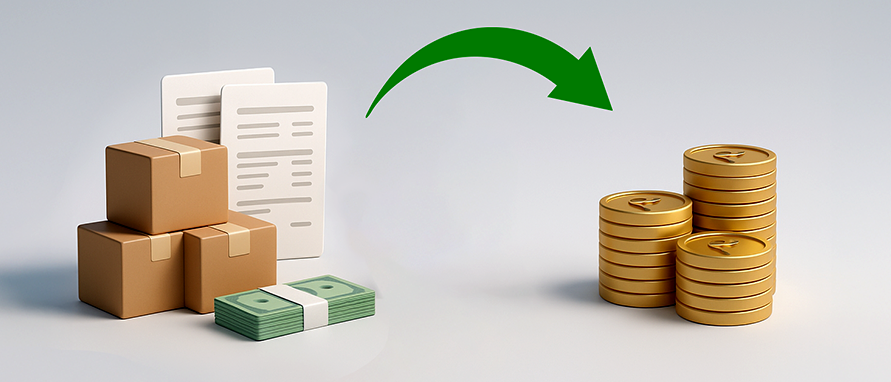
Discover what counts as a current asset to learn how short-term resources support liquidity and daily operations.
Current assets are short-term assets that a business expects to convert into cash within one year or within the normal operating cycle, whichever is longer. They play an important role in liquidity management by ensuring a company can meet its short-term obligations and operate easily without cash shortages.
Current assets refer to all assets that can be easily converted into cash within a short period, typically 12 months. These assets support the day-to-day operations of a business and reflect its ability to meet immediate financial needs.
Current assets are the resources which a business owns that are expected to be converted into cash, sold, or used up within a year. They form a major portion of net working capital and determine the company’s short-term financial strength.
Current assets support daily business operations by providing liquidity to manage routine expenses such as salaries, inventory purchases, supplier payments, and utilities. A company with adequate current assets is positioned to meet short-term obligations, manage routine operations, and address near-term financial requirements.
They also help evaluate working capital, which is important for measuring operational efficiency. A higher ratio of current assets to short-term liabilities signifies increased liquidity.
The main types of current assets include:
Cash and Cash Equivalents – Cash on hand, demand deposits, treasury bills, certificates of deposit.
Accounts Receivable – Money owed by customers for credit sales.
Inventory – Raw materials, work-in-progress, and finished goods available for sale.
Marketable Securities – Short-term financial instruments such as liquid mutual funds, commercial papers, or stocks.
Prepaid Expenses – Advance payments for services like rent, insurance, advertising.
Short-Term Investments – Any investment expected to mature within a year.
Other Current Assets – Any additional items expected to be liquidated soon.
Each component plays a distinct role in supporting liquidity:
Cash: The most liquid form of current assets; used for immediate expenses.
Bank Balances: Includes checking/savings accounts used for business transactions.
Accounts Receivable: Represents expected future cash from customers.
Inventory: Essential for production and sales cycles.
Marketable Securities: Provide liquidity with minimal risk.
Prepaid Assets: Reduce future cash outflow needs.
Short-Term Loans & Advances: Expected to be recovered within one year.
These components collectively determine the company’s ability to fund operations and demonstrate operational efficiency.
Current Assets = Cash + Accounts Receivable + Inventory + Marketable Securities + Prepaid Expenses + Other Current Assets
| Component | Amount (₹) |
|---|---|
Cash & Bank |
₹50,000 |
Accounts Receivable |
₹1,20,000 |
Inventory |
₹2,00,000 |
Marketable Securities |
₹80,000 |
Prepaid Expenses |
₹20,000 |
Other Current Assets |
₹30,000 |
Total Current Assets |
₹5,00,000 |
Some commonly known examples include:
Cash in hand and at bank
Short-term deposits
Accounts receivable from customers
Inventory such as raw materials and finished goods
Liquid mutual funds
Prepaid rent or prepaid insurance
Short-term loans and advances
Marketable securities like Treasury Bills
Calculating current assets is straightforward:
Identify all assets that will convert to cash within 12 months.
Gather values from the balance sheet.
Add the values of each component.
If a company has the following:
Cash: ₹40,000
Accounts Receivable: ₹1,00,000
Inventory: ₹1,50,000
Short-term Investments: ₹60,000
Total Current Assets = 40,000 + 1,00,000 + 1,50,000 + 60,000 = ₹3,50,000
The following table highlights the differences between both assets:
| Basis | Current Assets | Non-Current Assets |
|---|---|---|
Time Frame |
Converted into cash within 1 year |
Held for more than 1 year |
Purpose |
Supports daily operations |
Supports long-term growth |
Examples |
Cash, inventory, receivables |
Property, machinery, long-term investments |
Liquidity |
Highly liquid |
Low liquidity |
Current assets ensure liquidity, while non-current assets support long-term strategic goals.
Current assets play a central role in assessing short-term liquidity and operational strength. Knowing what they include, how they are calculated, and how they differ from long-term assets helps businesses maintain financial stability and manage working capital with ease.
Key points to remember:
Current assets reflect a company’s ability to meet short-term obligations
They include cash, receivables, inventory, and other near-term resources
The current assets formula helps track liquidity and financial readiness
Clear distinction from non-current assets improves balance sheet analysis
Managing current assets effectively helps maintain regular daily operations
This content is for informational purposes only and the same should not be construed as investment advice. Bajaj Finserv Direct Limited shall not be liable or responsible for any investment decision that you may take based on this content.
Current assets include cash, balances held in bank accounts, amounts due from customers, inventory, prepaid expenses, marketable securities, and other short-term items expected to be converted into cash within a year.
The formula for current assets is the sum of cash, receivables, inventory, prepaid expenses, marketable securities, and other short-term items, giving the total value of assets expected to be realised within the operating cycle.
Total current assets are calculated by identifying all short-term assets listed on the balance sheet—such as cash, receivables, inventory, and other near-term items—and adding their values to arrive at the combined amount.
The main components of current assets consist of cash, receivables, inventory, marketable securities, prepaid expenses, and short-term investments, all of which contribute to the organisation’s liquidity position.
.jpeg)












 Academy



.jpeg "image not found")